

Why I'm a Mormon and Support President Obama, Part 6/6: The Environment
 Post by Randy Astle -
We’re now on the cusp of election day and unfortunately time won’t allow me to do as deep a dive into Mormonism and environmentalism as I’ve done on my other topics. Still, the protection of the environment is important enough an issue that I thought it merited its own entry. I’ve been rather amazed throughout the presidential campaign that global warming and the environment have been virtually absent from the campaigns’ messages, even for President Obama who supposedly has a base concerned about government involvement in environmental issues. There have been other topics that have received little to no attention—education, the Supreme Court, nuclear disarmament—but the potential environmental catastrophe that we’re teetering into seems large enough that it would have received at least cursory examination.
So, following the lead of my earlier articles, how do my beliefs as a Latter-day Saint influence how I view the environment and environmental policy? The chief concept is one of stewardship, that the Lord has given us the earth on loan and that he will require an accounting of how we cared for it during our brief time upon it. As I study Church history my impression is that environmental thought was long absent from LDS rhetoric beyond a pragmatic desire to bend the elements to man’s will and make the desert blossom as a rose (Isa. 35:1). It’s only in recent years that other scriptures about environmental ethics have received attention, and I’m grateful for publications like the 2006 BYU-published book Stewardship and the Creation and the recent Sunstone issue on “Earth Stewardship” that have explored these issues in greater depth.
In discussing foreign aid, domestic economic policy, and domestic social issues, I have emphasized that I believe one of the primary purposes of a government is to protect and nurture the most powerless of God’s children. I see government not as a sentient entity but as a compact of the citizens it governs, and as such we the people have a responsibility for how our government acts in carrying out these duties; it is a tool the Lord has given us, not an obstacle we must overcome. Again, here’s D&C 134:1: “We believe that governments were instituted of God for the benefit of man; and that he holds men accountable for their acts in relation to them, both in making laws and administering them, for the good and safety of society.” Couple that with scriptures like the Lord’s statement that when we have cared for “one of the least of these my brethren, ye have done it unto me” (Matt. 25:40) and King Benjamin’s that “when ye are in the service of your fellow beings ye are only in the service of your God” (Mosiah 2:27) and we see that the disadvantaged, those who are unable to help or advocate for themselves, are probably those who the Lord most wants us to help.
The Earth, God’s footstool, is defenseless. It lies entirely at our mercy. I think there are no truer words in scripture than these:
“Mister!” he said with a sawdusty sneeze,
“I am the Lorax. I speak for the trees.
I speak for the trees, for the trees have no tongues.
And I’m asking you, sir, at the top of my lungs”—
he was very upset as he shouted and puffed—
“What’s that THING you’ve made out of my Truffula tuft?”
Our treatment of the Earth is perhaps the ultimate test of our character in this Second Estate, beyond how we view each other, our bodies, and other things over which the Lord has given us stewardship. Not even the Lorax could stop the Once-ler (us) from exercising his agency and his dominion over the Earth, so it’s up to us as free agents to decide what we will do. But it’s precisely because the Earth is so defenseless that the Lord requires such a careful accounting at our hand. Add to that the fact that we and our children and their children—and all God’s other living creations—have to live here for a very long time, and I cannot really fathom anyone wanting to err on the side of recklessness or diminish the tools, like the EPA, that could help us better care for the environment. This is one area where an overabundance of caution should prove universally acceptable, because all of humanity is at stake.
Well, the argument against the EPA or environmental regulations usually goes that they hurt business, they slow the economy, they cost jobs. There are a whole lot of people out there who still assert global warming isn’t a threat, but the primary rejoinder is an economic rather than a scientific one. Which is fine, because I don’t really know how to discuss this with someone who refuses to believe the enormous amount of objective evidence scientists have gathered in support of global warming being a man-made and potentially irreversible phenomenon. In addition to saying that all truth belongs to Mormonism, Brigham Young got specific and said, “Our religion will not clash with or contradict the facts of science in any particular” (JD 14:116). When 98% of the most active researchers on environmental issues agree that global warming is man-made, how could it be worthwhile for any Latter-day Saint to continue arguing that it’s a hoax or is scientifically unfounded? I think we would all, Republicans and Democrats, be better served if we locked arms and started trying to figure out ways to combat the threat.
But going back to the economic argument, not only is it very hard to believe that saving the planet is bad business, but the Lord has consistently shown that he values a lot of things a lot more than business. We are God’s children and he certainly cares about our ability to provide for our families—again, no one is saying it’s a zero-sum game between the environment and our pocketbooks because God is capable of taking care of both—but he is vitally interested in how we treat the earth and provide for a suitable home for his other children to live in. The command to “be fruitful, and multiply, and replenish the earth” (Moses 2:28) came long before the Fall and Adam’s consignment to working the earth “by the sweat of thy face” (Moses 4:25). Between those two verses the Lord taught Moses that “every plant of the field . . . and every herb of the field” (Moses 3:5) have spirits just like people and animals, so it just makes sense that these should receive higher prioritization in our minds than the system of buying and selling that Satan introduced after the Fall.
I haven’t yet given the Once-ler’s reply to the Lorax’s question. It’s telling:
“Look, Lorax,” I said. “There’s no cause for alarm.
I chopped just one tree. I am doing no harm.
I’m being quite useful. This thing is a Thneed.
A Thneed’s a Fine-Something-That-All-People-Need!”
Appropriating environmental resources—free gifts from heaven—for economic benefit is what Nibley calls the Mahan principle. “And Cain said: Truly I am Mahan, the master of this great secret, that I may murder and get gain . . . And Cain gloried in that which he had done, saying: I am free; surely the flocks of my brother falleth into my hands” (Moses 5:31, 33). It’s just business, ma’am. If some deforestation is involved, that’s an unavoidable cost of business. If we pollute some water in Ecuador, that’s a consequence of exploiting the Amazon’s fossil fuels. If fracking might be getting people sick in western Pennsylvania, we can’t postpone drilling until studies are done because our shareholders require consistent profits. And since inexorable commercial forces drive all these activities, and hundreds more, it’s not the government’s role to step in and restrict our right to conduct commerce.
And then I got mad.
I got terribly mad.
I yelled at the Lorax, “Now listen here, Dad!
All you do is yap-yap and say, ‘Bad! Bad! Bad! Bad!’
Well, I have my rights, sir, and I’m telling you
I intend to go on doing just what I do!
And, for your information, you Lorax, I’m figgering
on biggering
and BIGGERING
and BIGGERING
and BIGGERING
Unrestrained by government, it’s nearly impossible for companies that are driven by profit to restrain themselves from environmentally destructive but financially profitable behavior. There are concerned individuals who may run some of these companies, and there are rare exceptions like Wal-mart’s upgrading of its fleet technology and routing systems, but the bottom line is such a powerful force that I fear 49 times out of 50 environmental concerns get consciously or unconsciously brushed aside. I believe Satan pushes for this kind of mentality not because he’s out to destroy the earth but because it engenders a selfish mindset that will distract us from seeking for God. By contrast, those who are concerned about animals or the earth are quite likely, I suspect, to also be concerned about their fellowmen and, often, their God.
Both presidential candidates are beholden to big business. In August Mitt Romney released his energy plan for America, and my understanding is that the words “environment” and “global warming” never even appear in the document. Instead he’ll drill aggressively (which Obama is already doing) and roll back environmental regulations. All indications are that he would love nothing more than privatizing the EPA or breaking it up into state agencies, where localized commercial interests could easier sway policy away from wise global stewardship. Renewable energy is mentioned in his plan’s general statements but not in any of its specifics, meaning it will receive little beyond lip service in a Romney administration. Earlier I quoted D&C 104:17—“the earth is full, there is enough and to spare”—in saying that the Lord has the ability to give us unlimited resources, but I want to make clear I don’t think that means there’s no such thing as peak oil. It could just be that wind, solar, wave, and other developing energy sources, such as from nanotechnology, are the way the Lord desires to continue blessing us and ensuring that the benefits of electricity and technology spread throughout the developing world—and without the high cost of burning unlimited fossil fuels.
President Obama has a mixed record on the environment, and his campaign unfortunately continues to advocate for increased oil production and clean coal, which I am dubious will work in a truly sustainable economy. But his willingness to investigate options beyond increased drilling, his efforts to encourage (including helping fund) private technology firms to develop new energy sources, and his support of controlling damaging emissions through cap-and-trade is admirable and a necessary first step as we seek to end global warming and other environmental disasters. President Obama is aware of the ecological cost of America's actions and is actively engaged is seeking solutions for both our country and our entire world.
The Lord has given us this Earth, but it is not ours. I believe he will require an accounting from each of us as to how we cared for it and the plants and animals he placed upon it. I believe that we cannot let ourselves off the hook by saying “someday it will be renewed and receive its paradisiacal glory.” In fact, I believe that working to replenish the earth now will help prepare it for this renewal after Jesus’ Second Coming.
“SO…
Catch!” calls the Once-ler.
He lets something fall.
“It’s a Truffula Seed.
It’s the last one of all!
You’re in charge of the last of the Truffula Seeds.
And Truffula Trees are what everyone needs.
Plant a new Truffula. Treat it with care.
Give it clean water. And feed it fresh air.
Grow a forest. Protect it from axes that hack.
Then the Lorax
and all of his friends
may come back.”
LACK OF CIVILITY—THE REAL HALLOWEEN SCARE
Dear Friends,
The election has nearly arrived. Thank heavens!
I suspect that you and I are alike--glad the election season is coming to a conclusion. Some parts of our election process are very helpful. Focus is placed on issues which need to be debated. The spotlight is aimed on our leaders and potential leaders; we get to know them better. Most importantly, we are able to express our feelings when we vote!
Other aspects of this “silly season” are distressing: the abundant negative television ads, the distortion of positions, the obfuscation. I am most troubled, however, by the hostility exhibited in the 2012 election, and believe some of us need to grow up: respect and seek to understand differences, not belittle and demean.
Some extremes are horrifying: the real Halloween nightmare. In my own community, some folks were informally chatting at a church meeting. The conversation—as is often the case—drifted to politics. “I am so proud of my grandchildren,” beamed one. “They wrote a letter to Obama and told them that they hated him.” Another responded, “I wish he’d die.”
It is hard for me to believe such an event actually took place; civilized people reacting in this way and encouraging it in their progeny!
Another example: in an eastern Utah town, anonymous pranksters created a mock hanging: “A dummy of Romney [was] sitting in a chair by a tree holding onto a red rope that goes over a tree branch and forms a noose around the neck of a dummy Obama.” (Salt Lake Tribune, October 28, 2012) Thank heavens some observers, including the mayor of the Orangeville town, was appalled. But some of these Utahns were apparently laughing. I hope you are as appalled as I am.
Certainly, we differ. Some of us support Governor Romney; others advocate for President Obama. I celebrate the fact that we can disagree, examine, and express our reasons. But when that disagreement takes the form of demeaning, hate, and lack of respect, I am embarrassed.
I am convinced, though I disagree on some points with both presidential candidates, both men seek to serve our country for its good. One is our current leader; the other could be a future leader. Both deserve our honest and kindly attention. Neither deserves vindictive responses. I am embarrassed by those who take the lower road.
They do, indeed, turn our election months into the silly season—more than silly, their actions are deplorable.
Happy, although somewhat disappointed, Halloween
Kim R. Burningham

Why I'm a Mormon and Support President Obama, Part 5/6: Social Issues
 Post by Randy Astle -
As their name indicates, this is the elephant in the room for social conservatives. There’s a very large voting bloc that goes well beyond Mormonism for whom social issues, particularly perhaps abortion and now gay marriage, often take precedence over anything else. Described as “conservative family values,” these are often linked to family and framed within moral rhetoric—more than, say, economic or foreign policy issues—and tend, I think, to be the most discussed political topics in religious settings. They are therefore what often comes up when conservative Mormons discover that one of their friends is a liberal or a Democrat: “How can you support a party that supports abortion?” “How can you vote for Obama now that he’s come out in favor of gay marriage?” Etc.
It might not be possible to answer such questions satisfactorily, but I have two thoughts that move in that direction. First, taking a broad view helps. That, for instance, is why I’ve spent so much time in this series trying to establish that neither party is the party of God, neither has any more or less divine approbation than the other. As a peculiar people with our own set of beliefs we are going to agree with the Republicans sometimes, with the Democrats sometimes, and with neither party perhaps most of all. A nuanced view of an issue rarely falls inside a party platform. Second, we need a degree of pragmatism in the real world: I do not have to agree with a candidate on every issue in order to believe he or she will be the best candidate for that office; I actually doubt that I’ve ever found a candidate with whom I agree on everything—how could that even be possible? Thus it really comes down to prioritization, a little personal quid pro quo, although that doesn’t imply a surrender to cognitive dissonance or abandonment of our moral values: it just means that in our search for the greatest moral good in the real world of politics we all have to take what we can get, and some matters truly are weightier than others. Conservatives as well as liberals have to make these types of decisions.
Both of these thoughts get tied up in the question of what we’re really talking about with the rubric of “social issues.” I tend to take the broad view that they are any and all policy issues which deal with society. The gospel of the Latter-day Saints, of course, has a lot to say about building a proper society, more than any other Christian denomination I know of. Ultimately salvation is an interpersonal activity, structured vertically through generations of ancestors and descendents and horizontally through couples, families, and the community of Zion and its stakes. Joseph Smith was a highly social individual, and that concern has filtered down to us through his original teachings like that the “same sociality which exists among us here will exist among us there [in heaven], only it will be coupled with eternal glory, which glory we do not now enjoy” (D&C 130:2) and beyond that to a very intricate Mormon social structure. I’m writing this in my ward meetinghouse as six or seven families have gathered to let our children play in the aftermath of Hurricane Sandy. We were here doing the same thing yesterday (Monday) as the storm grew close; we trick-or-treated here on Saturday; I’ll be back tomorrow morning for playgroup for my three-year-old, Thursday night for a community orchestra rehearsal, Friday night for Activity Days, and Sunday, finally, for church, not to return until the next Wednesday for another playgroup—the longest hiatus of our week. And activities at the meetinghouse, as any Church member knows, is just the beginning.
So Mormons are social people, especially among our own, and the doctrines and practices about family and society run deep in our theology. And it’s issues that touch on these doctrines and practices that the Church leadership has reserved the right to comment on in the political sphere. In its statement of political neutrality, the Church newsroom says that the Church “reserve[s] the right as an institution to address, in a nonpartisan way, issues that it believes have significant community or moral consequences or that directly affect the interests of the Church.” This could yield a rather broad purview—moral issues could be construed to include war, poverty, and education, for instance—but Church leadership tends to limit its activities to issues that directly affect the structure of families: issues of marriage and sexuality.
In an earlier post I linked to a Mormon Matters podcast on the Church’s political history that discusses in depth how this happened, and that entire conversation is definitely worth hearing. Philip Barlow also implied the limitation during an interview for a New Hampshire Public Radio article:
“‘Joseph Smith taught that salvation, or exaltation, is a relational thing. And the relations that we’re talking about are most intimately marriage, and then nuclear family, and then the extended family, and then the wider community.’ So, Barlow says, when the 1960s saw the rise of casual sex and drug use, and the 1970s brought the Roe vs. Wade decision, many Mormons saw traditional family structures as being under threat . . . The Mormon theology of salvation and the family also explains how Church leaders openly pushed for Proposition 8 in California, which banned gay marriage. To non-Mormons, that appears to be a clear-cut political issue. ‘That’s different in the thinking of Church leaders,’ from endorsing a candidate, Barlow says, versus ‘when there’s a moral point at stake with some law or another. That’s how they officially construed Proposition 8. Mormon thinking construes damage to the family as a fundamental threat in society, and a fundamental threat for the well-being of human beings,’ Barlow says.”
Many people would assert there’s “a moral point at stake” with laws that seek equal pay for women or a higher minimum wage or more stringent inspections of food processing facilities, but it seems that the Church has determined those issues to not immediately influence family stability and therefore to not become involved with them. What’s unclear, as discussed in Mormon Matters, is whether that direction is coming from Church officials like the First Presidency and apostles, grassroots self-reinforcement through cultural norms among the general membership, or some sort of combination of both. But with rhetoric both over the pulpit and the dinner table focusing more on issues like gay marriage than, say, poverty, the former for better or worse tends to get the lion’s share of attention when Church members go to the ballot box.
I wanted to bring all of this into the conversation because I think it illustrates how for better or worse a few social issues have taken precedence in the thought of most Church members, even though there’s no fiat saying that these are or even should be the only social issues about which members should be concerned. My earlier point that we all have to prioritize which issues we most fervently support is validated by this conversation: for many members of the Church the social issues on which they’ve chosen to focus are abortion, heterosexual marriage, and other issues that revolve around sexual morality, like regulations on pornography or prostitution or even the display of sexually explicit media and entertainment. Because of this they support “socially conservative” politicians who share their beliefs on these core issues. Now, these issues certainly remain important for other Church members, but they may choose to emphasize them less than alleviating poverty or providing affordable medical care to all members of our society, so they will support politicians who support their views on those core issues regardless of what they think about the others. And that’s the way it should work, because who could ever find a politician that matched his opinions on every conceivable issue?
I don’t have much to say personally about gay marriage, for instance. I believe the Proclamation on the Family that says “marriage between a man and woman is essential to [God’s] eternal plan” and I agree with President Monson and other general authorities who have counseled us to oppose same-sex marriage. I believe I would oppose it regardless of any explicit statements from Church leaders just because of what I believe about the purpose of marriage in the plan of salvation, the importance for children of two-parent families with a father and a mother, and the complex moral position of homosexuality. I have similar opinions about premarital sex, marital infidelity, divorce, and abuse.
(That’s not to say, by the way, that I believe there should be no conversation about homosexuality within the Church. I’ve been quite pleased, for instance, by last April’s “It Gets Better” video by and for gay BYU students, and I’ve been excited to watch the progress of the Far Between movement and documentary that promotes understanding between gay and straight members of the Church.)
But I don’t see myself as “favoring traditional marriage” or “against gay rights,” the labels that would normally be attached to the position I just outlined. Those are labels that are insufficient, myopic. If I had to label myself I would say I’m “pro-family.” What that means is I cannot stop at just saying, “I think laws that would allow same-sex marriages should not be passed.” It’s much bigger than that, coming from the Proclamation’s last sentence: “We call upon responsible citizens and officers of government everywhere to promote those measures designed to maintain and strengthen the family as the fundamental unit of society.” This is a call to actively promote measures that not only maintain traditional family structures like heterosexual monogamy, but that seek to strengthen families in myriad other ways. We must implement programs that help marriages stay together. We must do what we can to help children belong to a married “father and a mother who honor marital vows with complete fidelity.” We must fight poverty, disease, crime, ignorance, and any other societal ills that contribute to the breaking down of extended and nuclear families. Simply protecting traditional marriage is only the tip of the iceberg.
So I choose to evaluate my pro-family position against a large network of issues and programs, weighing some points more heavily than others. If I’m presented with a candidate—or an entire party platform—that supports legalizing same-sex marriage but also supports strong measures for reducing poverty, then I’m prone to support that candidate or party because I believe that poverty is a greater danger to marriage and childrearing than gay marriage. I regret that promoting gay marriage remains part of that candidate’s or party’s agenda (realizing, of course, that many Church members support gay marriage), but I believe that the overall result will be beneficial for families and society, a stance I don’t see as being cognitively dissonant or dishonest in any way because it achieves the greater moral good. Of course, if I were able to find a candidate who supports both heterosexual marriage and complete socialization of the health care industry, for example, then that candidate would have my unreserved support. Barring such an unlikely possibility (because it straddles the extremes of our country’s two parties), I will take what I can get, emphasizing the candidate who I think can do the most good.
In my last two points on foreign affairs and economic policy I’ve emphasized that I think one of the most fundamental purposes of government is to eradicate poverty and inequality wherever it may exist; this is in accordance with my self-identification as “pro-family,” though I could add the labels “pro-community” and “pro-life” to myself as well. This last term, in fact, which is normally associated only with opponents of abortion, was brilliantly reified and explained by Thomas Friedman in his Times editorial last weekend. Forgive my quoting him rather extensively:
In my world, you don’t get to call yourself “pro-life” and be against common-sense gun control — like banning public access to the kind of semiautomatic assault rifle, designed for warfare, that was used recently in a Colorado theater. You don’t get to call yourself “pro-life” and want to shut down the Environmental Protection Agency, which ensures clean air and clean water, prevents childhood asthma, preserves biodiversity and combats climate change that could disrupt every life on the planet. You don’t get to call yourself “pro-life” and oppose programs like Head Start that provide basic education, health and nutrition for the most disadvantaged children. You can call yourself a “pro-conception-to-birth, indifferent-to-life conservative.” I will never refer to someone who pickets Planned Parenthood but lobbies against common-sense gun laws as “pro-life.”
“Pro-life” can mean only one thing: “respect for the sanctity of life.” And there is no way that respect for the sanctity of life can mean we are obligated to protect every fertilized egg in a woman’s body, no matter how that egg got fertilized, but we are not obligated to protect every living person from being shot with a concealed automatic weapon. I have no respect for someone who relies on voodoo science to declare that a woman’s body can distinguish a “legitimate” rape, but then declares — when 99 percent of all climate scientists conclude that climate change poses a danger to the sanctity of all life on the planet — that global warming is just a hoax.
The term “pro-life” should be a shorthand for respect for the sanctity of life. But I will not let that label apply to people for whom sanctity for life begins at conception and ends at birth. What about the rest of life? Respect for the sanctity of life, if you believe that it begins at conception, cannot end at birth. That radical narrowing of our concern for the sanctity of life is leading to terrible distortions in our society.
Respect for life has to include respect for how that life is lived, enhanced and protected — not only at the moment of conception but afterward, in the course of that life. That’s why, for me, the most “pro-life” politician in America is New York City Mayor Michael Bloomberg. While he supports a woman’s right to choose, he has also used his position to promote a whole set of policies that enhance everyone’s quality of life — from his ban on smoking in bars and city parks to reduce cancer, to his ban on the sale in New York City of giant sugary drinks to combat obesity and diabetes, to his requirement for posting calorie counts on menus in chain restaurants, to his push to reinstate the expired federal ban on assault weapons and other forms of common-sense gun control, to his support for early childhood education, to his support for mitigating disruptive climate change.
Now that is what I call “pro-life.”
I’m a New Yorker and haven’t been thrilled with everything Mayor Bloomberg’s done, particularly with education policy and his unprecedented pursuit of a third term, but this description is incredibly apt—it groups together many of Bloomberg’s achievements that otherwise look haphazard and dictatorial (and which run into the same counter arguments I discussed last time: a few weeks ago I saw a PepsiCo delivery truck emblazoned with the slogan, “Don’t let government bureaucrats take away your right to choose your beverage”). If we see all of Mayor Bloomberg’s policies as pro-life, a pattern emerges that goes deeper and embraces more areas than we normally ever even think about with this terminology, and we can even include the city’s new bike lanes and the closure of Broadway to vehicles around Times Square. The mayor’s only position I would differ from is the first one about a woman’s right to choose, because I believe that abortion should only be considered when the life of the baby or the mother is at stake or when pregnancy is a result of rape, abuse, or incest. Though I arrived and that independently it is, by the way, also the Church’s position, a middle road between being either pro-choice or pro-life that therefore brings us grief from both sides: hence the perennial pro-life protesters with graphic placards outside every general conference. My point here is that it is possible to really be “pro-life” by supporting the life of the unborn baby, the life of the mother—including her quality of life when the pregnancy results from trauma—and the life of the child and family after birth. (And that policy is in harmony with Church leaders’ teachings that we don’t really know at what point a premortal spirit enters its physical body, as in page 354 of Man: His Origin and Destiny in which the First Presidency says, “The body of man enters upon its career as a tiny germ or embryo, which becomes an infant, quickened at a certain stage by the spirit whose tabernacle it is, and the child, after being born, develops into a man.” See also Journal of Discourses 17:143, Doctrines of Salvation 2:280-281, and even Mormon Doctrine 768.)
I also believe that people who are pro-life and really want to minimize the number of abortions in this country will give women all the tools they can to avoid unwanted pregnancy. Teaching the law of chastity obviously comes at the top of that list, but it’s obviously unrealistic to expect all American women (and men) to quickly adopt that standard. Therefore, making contraception available becomes the next biggest factor, and a study published October 4 in Obstetrics & Gynecology (and discussed here) showed that having free access to birth control, as provided under the Affordable Care Act, reduces abortion rates from 20 per 1,000 sexually active women to 4.4-7.5 per 1,000 women. The birth rate among teen girls was almost six times lower than the national average, and 75% of all women chose to receive IUDs or implants, the most effective—but, previous to the health care reform law, expensive—forms of reversible contraception. What this means is that the Affordable Care Act has the potential to significantly lower the rate of unwanted pregnancies and abortions throughout the country, which is a very positive thing for anyone who wants to reduce abortion rates. The same is true of Planned Parenthood.
My positions on issues like gun control and immigration are similar to this. I’m pro-life and believe the Lord doesn’t want us to kill anything unnecessarily, and since guns are used essentially exclusively for the taking of life—whether animal or human—my religious and moral position makes me essentially oppose the ownership of guns for any reason. I understand the original motivation for the Second Amendment, but today it’s out of date and out of sync with scriptures like Genesis 9:10-13 JST (which includes a commandment against killing animals unless faced with starvation) and Mormon 7:4. We don’t need to jettison the entire Second Amendment, but as society becomes increasingly urban some serious reform will help make us safer and more in-line with basic Judeo-Christian-Muslim law about the sanctity of life—and acknowledge the fact that many, many, many guns are used for crime rather than hunting or self-defense.
I mentioned immigration when discussing foreign policy, specifically how most of it, at least from Latin America, is a result of failed, oppressive, or exploitative U.S. policies south of the Rio Grande. My opinions about this really solidified on my Spanish-speaking mission in Atlanta where I dealt with undocumented immigrants every day, including nearly all the Latter-day Saints I met. My most profound religious belief affecting this topic is that we are all children of the same God, regardless of race, language, religion, or nationality (2 Ne. 26:33; 29:7). If we all share our divine origin and potential to become like God then any law or policy that institutionalizes discrimination is ill-founded at best, and any language that considers another person, not an activity, as “illegal” is simply unconscionable. Second to this is my belief that all of the Americas—not just the United States—are the free and promised land spoken of time and again in the Book of Mormon. This does not diminish the importance of the U.S. Constitution as an inspired document or the role the U.S. has played and will play in the Restoration and world’s affairs. But there’s no limitation on the Lord’s blessings and the combination of the Nephites’ repetition of these promises and application to themselves long before 1776, the inclusionary language of verses like Doctrine & Covenants 10:49-51 (which emphasizes the plurality of the nations included in the Lord’s promise), the history of Latin America in achieving independence from European monarchy (2 Ne. 10:11), and my own experiences in seeing how the Lord has blessed and inspired some undocumented immigrants in remaining in the United States has shown me that the hand of God stretches from the Yukon to Patagonia, and that his desire is to bless everyone who lives upon these shores.
Combining all that with my stance of being pro-life means I think we should do everything we can to improve the lives of everyone, regardless of birthplace, who has struggled and sacrificed to live among us and build up our society. Combining it with being pro-family means I believe that nuclear families should be kept physically together as much as possible and laws should not threaten their peace of mind or lifestyle (compare Arizona’s strict immigration law, written by a fellow-Church member, with the anti-polygamy legislation of the 1800s). Being pro-community means I recognize the positive economic effect and long-term stability that immigrants bring to the American economy and that we should actually encourage more immigration, not less. I also believe that the United States has some atoning to do for its negligent behavior in Latin America (check out the book and film of Harvest of Empire for more about that) and that, as part of that, anyone who wants to come here should have an opportunity to do so; once here they should be protected the way the Nephites protected the Ammonite immigrants in the land of Jershon. Any laws that encourage the persecution or even marginalization of a portion of the population are economically ill-conceived and morally dubious; they damage families, basically, and I am trying to find ways the government can protect and nurture families.
Governor Romney’s positions on immigration, from advocating “self-deportation” to supporting spreading the Arizona law to other states, regardless of its dubious constitutionality, will terrorize immigrant families, who have come here at great sacrifice to provide a better life for their children than was available in their homelands, and who already work incredibly hard to contribute to our economy and society. Except for a few Native Americans, we are all descendents of immigrants, so it should be easy to put ourselves in the shoes of today’s immigrants and ask what could have motivated them to tear up everything and come here and what, now here, can most help them in building up their families and our shared society. We should follow the Proclamation in seeking that the government “promote those measures designed to maintain and strengthen the family,” regardless of origin. I agree with Harry Reid’s assessment of the Arizona law: “Laws that legalize discrimination are not compatible with our nation’s ideals and traditions of equal rights, and the idea that such an unconstitutional law should serve as a ‘model’ for national reform is far outside the American mainstream.” And I’m pleased with President Obama’s progress in making the U.S. more hospitable to Hispanic immigrants, though there's much more left to do.
The scriptures are replete with stories of immigrants—some welcomed in their new lands, some not—who journeyed to obey the promptings of the Lord and find a better life for their families—including Joseph, Mary, and the infant Jesus who fled into Egypt the same way many parents from Honduras, El Salvador, Nicaragua, Mexico, and elsewhere have fled here. We should treat these families with the same deference we would want ourselves or our Lord to be treated, for “inasmuch as ye have done it unto one of the least of these my brethren, ye have done it unto me” (Matt. 25:40).
I’d like to close this post by looking at what I consider to be the biggest social issue and moral dilemma facing our country today, which is the accessibility and affordability of health care; improving it is the reason I voted for Mr. Obama in the primary and general election in 2008 and the main reason I will vote against Mr. Romney, who has promised to repeal the Affordable Care Act, next week. If in the midst of all the material blessings we have received as a country we are unable to care for our sick, then I fear, a bit like the prophets of old, that the Spirit of the Lord will no longer preserve us and we’ll be left to our own devices (as in Hel. 4:24).
I don’t think I need to spend any time proving that the Lord has commanded us to care for the sick. No LDS reader is going to seriously suggest that the Lord wants the sick to care for themselves. The question, then, is whether the government or an unregulated private industry can best accomplish that. Proponents of the latter say that competition between health care providers fosters innovation that drives medical techniques and keeps down costs. They say that being able to choose between doctors, or no doctor at all, is a right and any attempt to limit that choice or require them to purchase health insurance is a violation of their agency. The federal government should not have the authority to involve itself that deeply into their personal affairs, they say, and no one can constitutionally be required to purchase anything.
The legal arguments against these positions have been presented plentifully by the Justice Department and others, and they rest upon the concept of a community contract that I presented last time which limits choice in order to improve the general good: when one person gets sick, the entire community has to pay for it, so it is therefore within Congress’s power to require the purchase of a product to mitigate that. (I disagree with Justice Roberts’ evaluation of the law as a tax and hope that can leave the door open for further movement toward a truly nationalized system.) But I’d like to take the same step back I’ve been trying to take throughout this post and just look at the Affordable Care Act through the lens of being pro-family or pro-life. If we are in favor of saving lives and families then we will favor any measure that will protect and nurture them, whether we see it as curtailing a little bit of our freedom or not.
So will the Affordable Care Act protect families? I’ve already talked about how it’s improved prenatal care and diminished abortions. It already is making health care available to more Americans than ever before. In September we saw that the number of uninsured Americans dropped—by 1.3 million—for the first time in three years (due to both young people remaining on their parents’ insurance and more people enrolling in Medicaid and Medicare). That’s a great improvement over those excluded under the system of private insurance, but it still leaves around 48-49 million Americans without recourse to standard medical care (and remember how proud we Mormons often are to have achieved a mere 12 million Church members).
On October 10 Mitt Romney claimed that the existing private system of emergency room care was sufficient for the uninsured (something he’s said before), and that through that system nobody ever dies because they’re uninsured. “We don’t have a setting across this country where if you don’t have insurance, we just say to you, ‘Tough luck, you’re going to die when you have your heart attack. No, you go to the hospital, you get treated, you get care, and it’s paid for, either by charity, the government or by the hospital.’” He apparently received some pushback on that comment because the next day he doubled down, saying that “people will always receive the treatment they need, and do not die or suffer because they cannot pay for care.” I myself, having spent many years uninsured, even while working, can disavow this last claim that the uninsured don’t suffer; both my wife and I have dealt with chronic but not life-threatening issues for which we haven’t been able to access treatment, and the financial and mental suffering is another matter altogether. But more distressing than these quality of life issues is the estimate that roughly 26,000 Americans do actually die each year from conditions that could have been treated had they been insured. It does not matter how advanced a country’s medical care is if 15% of its population cannot access it; that’s why in the WHO’s 2000 rankings of countries’ medical systems the United States ranked 37th, between Costa Rica and Slovenia. Critics have said that the rankings were biased toward countries with socialized systems, but I believe that’s exactly the point because it reflects the fact that inaccessible care is worse than bureaucratically inefficient care or technologically out-of-date care. If we are truly our brothers’ keepers and want to promote life, health, and happiness for all the citizens of our country, then we will devise a system where everyone can actually access health care, and not just for heart attacks. I don’t care how advanced the treatments are for the 85% if 15% have no way to receive it. I’d rather be a bit less scientifically advanced but a bit more inclusive, and that, to me, is an infinitely better system.
I really appreciated this essay, nearly a year old now, in which the author describes how she was opposed to the Affordable Care Act but then was diagnosed with cancer and had her life saved because of the law’s pre-existing conditions provision. Without that she couldn’t have received medical insurance, and good luck trying to treat cancer by walking into an emergency room every other week.
But also note the financial information in her story. That brings me to my second and final point about government aid in health care: that healthcare is unreasonably expensive and dealing with it is a major burden on families and individuals. So yes, the Affordable Care Act represents a redistribution of wealth, whether you want to call it a tax or a regulation of interstate commerce. I won’t get into all of its funding systems here—that’s the subject for another blog—but it does in a way require funds from the well-to-do to pay for those who cannot pay for themselves. That sounds a lot like a nationalized system—which in fact I believe that would be a much more efficient and just way to go, just like essentially every other developed nation has decided—but it also sounds like one big insurance pool (but one where no one’s excluded for being sick). However you look at it, it is set to relieve a great deal of financial strain throughout middle- and lower class America.
As Latter-day Saints we want to protect the family. We focus on social issues that do this and foster families’ growth. “We call upon responsible citizens and officers of government everywhere to promote those measures designed to maintain and strengthen the family as the fundamental unit of society.” We’re willing to fight, at great cost, to stop legislation allowing same-sex couples to marry, but we tend to forget the very damaging things to the families that already exist. Consider that financial problems are the leading cause of disagreements and divorce in marriage. Even back in 1975, Marvin J. Ashton, in his classic piece of familial financial advice “One for the Money,” said, “the American Bar Association recently indicated that 89 percent of all divorces could be traced to quarrels and accusations over money. Others have estimated that 75 percent of all divorces result from clashes over finances. Some professional counselors indicated that four out of five families are strapped with serious money problems.” Now consider that the leading cause of personal bankruptcies—studies indicate between 42% and 62% of them, in fact—are caused by medical bills. 78% of those who filed had insurance, by the way, meaning it did not save them from being buried under their medical bills. So it stands to reason that one of the most important things we can do is to eliminate or at minimum mitigate medical bills as a negative factor in family finances. These numbers are the result of decades of the free market determining costs and private insurance companies’ practices. By allowing the Affordable Care Act to reach full effect in 2014 we will protect tens of thousands of families from these dangers.
This has been true in my own family. We’ve spent about half of our thirteen-year marriage uninsured; it’s effected our medical care, of course, but also our career choices as we’ve repeatedly been forced to seek full-time employment that provides medical benefits but didn’t advance our professional goals or long-term ability to increase our earning power. We’ve twice paid nearly all our life savings for medical bills, and we’ve thrice been denied Medicaid because our assets were too high. Obviously all of this has been incredibly stressful, even when fully insured and considering career changes. In fact, the only time we’ve had true peace of mind was the two years we lived in England and used the National Health Service to give birth to our first daughter and treat other conditions. When our second daughter developed a retropharyngeal abscess when she was a few months old, it was only the fact that we were on Medicaid that saved us financially; even if we had private insurance all the payments would have easily sunk us, let alone what would have happened had we been uninsured.
So, I’ve tried to give some examples of government programs and policies that can strengthen families and protect them from the vicissitudes of the world or even the active buffeting of Satan. I truly believe that we need to look at the big pictures of social issues: what will most help families, like the Proclamation says, and where can we have the most influence (focusing on an issue like abortion that has little chance of changing could prove an ineffective use of energy). I don’t support everything that President Obama has done, but I do believe he is involving the government in the right way to mitigate the exigencies of the free market to protect families and individuals. Governor Romney has proposed measures that protect certain aspects of society, but at a greater holistic cost than benefit. And for that I support President Obama’s re-election.
Next I’ll look at how we need to protect the most vulnerable thing of all: the earth.
Mormon Policies on Politics and Conscience
 From the Salt Lake Tribune[/caption]
Guest Post by Julia Taylor; this article is cross-posted on poetrysansonions.com
I am doing a series of posts on the "Mormon Moment," on my personal blog. (My original post focused on the policies of the LDS church, and included the issues around the Prop 8 election in California, which has already been more than covered here on this website, so I won't go into all the details again.) Most people assume that the cultural bias towards the Republican party by many members of the LDS church is doctrinally based. As a recent post on my personal blog addresses, culture and doctrine can be tricky for members of the church to sort out. For those who are not LDS, it can seem downright convoluted. I hope that this post and its sources help to clear up some of these distinctions in regards to politics.
Mormon Policies on Politics and Conscience
Most of the time, the LDS church stays out of political races and referendums, and it releases only general statements on issues that relate to church doctrine. Church leaders do not tell members how to vote or ask for them to reveal how they voted. The only constant doctrine taught about the responsibility of church members consists of asking their members to be active citizens who intelligently vote their conscience. The official church position regarding politics can be found in the Articles of Faith, the Doctrine and Covenants, and also the Official Church Handbook 2, which is available online at LDS.org. The Articles of Faith and Doctrine an Covenants are canonized LDS scripture, while the Official Church Handbook is a manual with instructions for how to administer the day-to-day functions of a LDS congregation and life.
Articles of Faith 11 and 12 states:
11. We claim the privilege of worshiping Almighty God according to the dictates of our own conscience, and allow all men the same privilege, let them worship how, where, or what they may.12. We believe in being subject to kings, presidents, rulers, and magistrates, in obeying, honoring, and sustaining the law.
Doctrine and Covenants 58:19-22 elaborates on the basics in the Article of Faith, when it says:
19 For verily I say unto you, my law shall be kept on this land.
20 Let no man think he is ruler; but let God rule him that judgeth, according to the counsel of his own will, or, in other words, him that counseleth or sitteth upon the judgment seat.
21 Let no man break the laws of the land, for he that keepeth the laws of God hath no need to break the laws of the land.
22 Wherefore, be subject to the powers that be, until he reigns whose right it is to reign, and subdues all enemies under his feet.
Doctrine and Covenants 98: 7-10 elaborate further when it explains why good political leaders are important, and why being actively involved in choosing good leaders, (when living in a place where citizens have the chance to be involved in choosing their leaders) is important, and keeping bad leaders from governing is a sacred responsibility.
7 And as pertaining to law of man, whatsoever is more or less than this, cometh of evil.
8 I, the Lord God, make you free, therefore ye are free indeed; and the law also maketh you free.
9 Nevertheless, when the wicked rule the people mourn.
10 Wherefore, honest men and wise men should be sought for diligently, and good men and wise men ye should observe to uphold; otherwise whatsoever is less than these cometh of evil.
This means that Mormons start with the foundational understanding that as members of the LDS church we have an obligation to obey, honor and sustain the laws of the land, even when we don't agree with specific political leader(s) or a particular law. We recognize many forms of government, not just democracies, as being viable and acceptable in the eyes of God. We may claim that the Church of Jesus Christ of Latter-day Saints is the one true church, but we respect the right of others to believe and worship differently. We can share our religious beliefs, but every person on the earth has the right to believe or not to believe in God. Every person has the right to worship in ways that are consistent to their beliefs, even if we do not understand, agree, or approve of those religious practices. Every government has the expectation that Mormons who are citizens will follow and uphold the laws of their land, no matter the specifics of how that government functions.
The Official Church Handbook has several areas that speak about the responsibility of LDS members in relation to their government, regardless of where in the world those members live. This is a sampling of the sections that are important within the framework of the current election in the United States of America.
21.1.21 Income Taxes
Church members are obligated by the twelfth article of faith to obey the tax laws of the nation where they reside (see also D&C 134:5). Members who disapprove of tax laws may try to have them changed by legislation or constitutional amendment. Members who have well-founded legal objections may challenge tax laws in the courts.
Church members who refuse to file a tax return, pay required income taxes, or comply with a final judgment in a tax case are in direct conflict with the law and with the teachings of the Church. Such members may be ineligible for a temple recommend and should not be called to positions of principal responsibility in the Church. Members who are convicted of willfully violating tax laws are subject to Church discipline to the extent warranted by the circumstances.
21.1.23 Laws of the Land
Members should obey, honor, and sustain the laws in any country where they reside or travel (see D&C 58:21–22; Articles of Faith 1:12). This includes laws that prohibit proselytizing.
21.1.29 Political and Civic Activity
As citizens, Church members are encouraged to participate in political and governmental affairs, including involvement in the political party of their choice. Members are also urged to be actively engaged in worthy causes to improve their communities and make them wholesome places in which to live and rear families.
In accordance with the laws of their respective governments, members are encouraged to register to vote, to study issues and candidates carefully, and to vote for individuals whom they believe will act with integrity and sound judgment. Latter-day Saints have a special obligation to seek out, vote for, and uphold leaders who are honest, good, and wise (see D&C 98:10).
While affirming the right of expression on political and social issues, the Church is neutral regarding political parties, political platforms, and candidates for political office. The Church does not endorse any political party or candidate. Nor does it advise members how to vote. However, in some exceptional instances the Church will take a position on specific legislation, particularly when it concludes that moral issues are involved.
Church members are encouraged to consider serving in elected or appointed public offices in local and national government. Candidates for public office should not imply that their candidacy is endorsed by the Church or its leaders.Church leaders and members should also avoid statements or conduct that might be interpreted as Church endorsement of any political party, platform, policy, or candidate.
Members are encouraged to support measures that strengthen the moral fabric of society, particularly those designed to maintain and strengthen the family as the fundamental unit of society.
Church records, directories, and similar materials may not be used for political purposes. Church facilities may not be used for political purposes. However, facilities may be used for voter registration or polling where there is not a reasonable alternative (see 21.2).
(Emphasis and underlined text has been added by the author to emphasize parts of the church policy that oftentimes is ignored by cultural Mormons.)
I don't mind talking about my political views, but I don't talk about politics while at church, period. We have so many cultural biases towards blindly voting Republican within the Church, that I usually find that other church members might not appreciate me trying to explain the complex layers of grey that go into the fact that I vote for both Republicans and Democrats. Many become defensive when I explain my process, and how I research to pick the candidate who I think is best for the job. Since I can't say, "I am a (fill in a political party)," I keep my politics out of my worship.
In this presidential election, I have already voted for Barack Obama. My choice in voting is really two-thirds a vote for Obama, and one-third of a vote against Mitt Romney. I didn't think I would be voting against Mitt, (if he ever was on the ticket) when he was running back in 2008. Then I saw him as a real possibility of a moderate Republican who had a record of putting together solutions that work. He did some impressive things getting the Olympics back on track, and while Romneycare didn't go as far as I hope a national plan eventually will, the way he got it passed showed he could work with people who are not Republicans. This is was an improvement over Bush.
That was 2008, and this year is 2012. The Romney that I had respect for in 2008 does not seem to be around in 2012. His willingness to say ANYTHING to win does not sit well with me as a citizen, a Mormon, or a voter. Whether he believes all of the things he says or not, he can't mean everything he says, because he disagrees with himself over and over. Mitt's choice of Paul Ryan as a running mate was his final bad choice - made out of expediency, and this choice made it impossible for me to see him as the man I admired four years ago.
That is why I am not voting for Romney, but the reasons I am voting for Obama are quite a bit more nuanced. Some of it is self-interest. I am on COBRA health insurance, and if Obamacare stands, I will be able to keep the very good insurance I have now. If I had to buy insurance on the open market, I would be uninsurable. In 2008, health care was one of my big issues, and Obama delivered on his promise to expand health care to many more Americans. My husband's company pays him well, and our income qualifies us as the lower end of the middle class. The Obama economic program will benefit us much more than the Romney/Ryan plan would. So selfishly, I get more benefits, even if I do pay more in taxes, if Obama is president for the next four years.
I am not looking for a grand change in fiscal policy. I think President Bush did some unforgivable things to the economy, and we aren't anywhere close to having those items turned around. Obama hasn't been perfect, but I trust him to make the best choices he can, and to think about the middle and lower class as Americans, not a drain on the "real Americans." I am hoping that there will be enough pressure on the Republicans in Congress so that some work actually gets done, but I would rather have Obama get less done, than Romney getting most of what he says he wants to do. I trust Obama to find policy compromises that work. I can't see any Republican having the guts (or gonads) to go against the right-wing of the party, least of all Romney.
Obama is my choice. He got my vote, and he got a $50 donation a few months ago. Obama also got the support of my kids, (without them knowing what I thought,) and they volunteer with their father and participate in the "Get Out the Vote Effort!" (Taking my children to political rallies, protests, and campaign events with politicians and political movements on both sides of the aisle has been an important part of educating them to be good citizens.) My children believe that Obama will give them the best future, and they are not your average preteens. When they laid out their reasoning for why they want Obama to be president for the next four years, I was proud to discover that their reasons were similar to mine. While I am the only one with the legal right to vote, my vote carried the hopes and dreams of my children when I mailed my ballot on Monday.
Authors Note: My goal with the "Mormon Moment Series" has been to explain "Mormony" things to those who may be interested in learning about Mormonism. I include my experiences, and those of other bloggers, so I regularly have links to blogs I read and comment on, while I also link directly to official sources like LDS.org or other official church sites.
In no way is this post meant to be an exhaustive study of the issues related to the LDS church and its policies regarding voting and elections. For those of you who would like to read my personal thoughts on Prop 8, or are interested in why I, and Mormons for Obama, always clearly state that we don't speak for the LDS church, you can read the rest of my original post here. If you are interested in a laugh, and understanding which policies were broken in the Gay Trees and Gadianton Robbers incident, you will also find that there as well. For another Mormon perspective posted yesterday, see Sarah Familia's great post on why she chose to vote for Obama.
President Obama Endorsed by Mormon Democrats
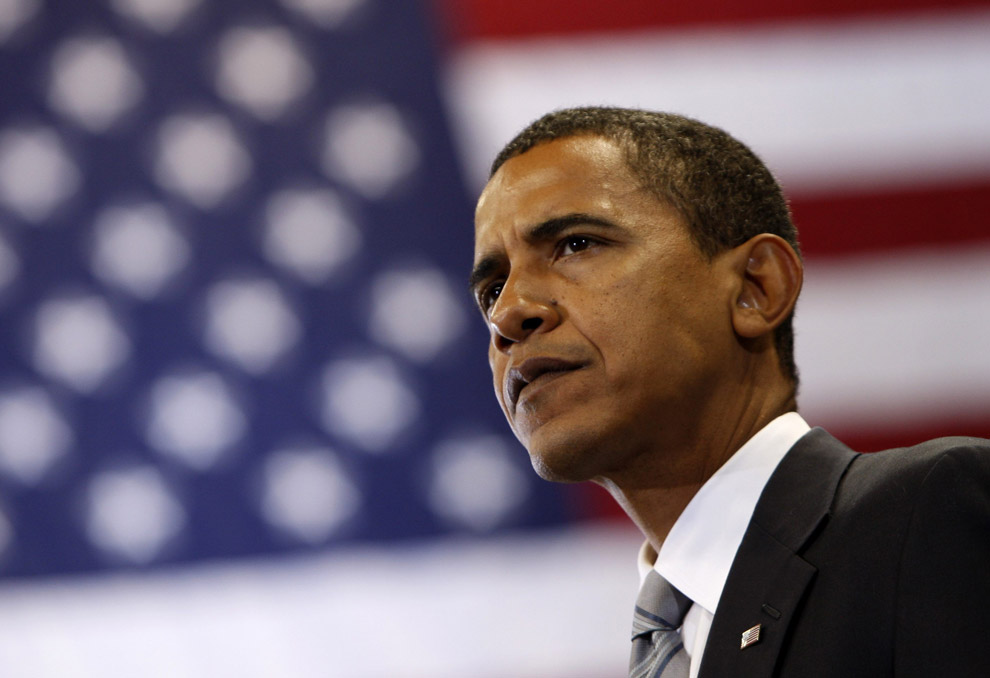 In 2008, President Barack Obama was elected into one of the worst economic disasters since Franklin Roosevelt stepped into the Oval Office. The United States economy was shedding approximately 800,000 jobs per month. Home foreclosures were skyrocketing and the stock market plummeted. From continuing the Troubled Asset Relief Program (TARP) and the Recovery Act, to the emergency bailout of General Motors and Chrysler, policies pursued by the Obama administration and the Federal Reserve put a floor on the recession and returned the economy to sustained growth. The GDP growth rate turned from negative 5.3 percent during the first quarter of 2009 to positive growth by the third quarter. Today, the unemployment rate is lower than it has been at any point during Obama’s term in office led by 31 consecutive months of private sector job growth. The stock market indices more than doubled from their low point, observed just six weeks after Obama took office. Corporate profits of the Fortune 500 reached an all-time high in 2011 and consumer confidence is now higher than it has been at any point since 2007. The housing market is recovering, with home prices, sales, and construction rates rising significantly in 2012. Even though the Obama administration’s handling of the economy has not been flawless, their accomplishments have been impressive given unprecedented partisanship in Washington.

Romney's Charitable Remainder Unitrust
Well, yesterday we learned pretty much nothing new about Mitt Romney. Well, we learned that Harry Reid wasn't so far off when he questioned Mr. Romney's tax history (although we still haven't seen convincing evidence that Romney didn't paid any taxes in recent years). We learned that Mr. Romney's vast wealth is still mostly untouched by taxes. We also learned a new acronym, the one for the special vehicle into which Romney put quite a bit of financial resources: the Charitable Remainder Unitrust, or CRUT.
For those of you who don't know what a CRUT is, join the club. Even after this Bloomberg article on the Romneys' CRUT, I still don't quite understand what it is, other than a way that really rich people are able to basically stash their money in a charity and yet keep on earning tax free interest on it, and often--but not always--leaving a little something for the charity. In this case, Mr. Romney stashed his funds in the LDS Church, and it's looking like somewhere between 0% and 8% of the original value will be left over for the Church after Romney officially turns it over to them. But, in all honesty, and other than the CRUT details, we've known that all before today.
This is a helpful reminder of the reason we have taxes in the first place, and the reason we need them. Remember, conservatives always argue that if we just had lower taxes on the wealthy, those wealthy would be able to spend that money on some wise charitable project. The idea that if the rich (or 'job creators') had more money then they'd create more jobs, also flies in the face of the fact that Wall-Street has completely recovered under Obama. The more people complain about unemployment under Obama, during which time Wall-Street performed exceptionally well, the more they prove that 'trickle-down' economics are simply a thinly veiled excuse to benefit the rich at the expense of the poor. Lower taxes on the rich doesn't produce more jobs or give a dramatic increase in charity. Mitt Romney is a master at lowering his own taxes--legally, of course--and it doesn't really seem like the conservative prediction held true. Instead, with his pocketed tax dollars, he purchased a couple of Cadillacs, three houses valued at around $20 million, and a car elevator.
Now, let me be clear here. I'm not criticizing those purchases. I've certainly spent money on personal stuff that I could have given to charity, and I think most of us have. And the Book of Mormon teaches that we should help people achieve their wants as well as their needs (Mosiah 18:29, D&C 51:3, Alma 35:9, and D&C 82:17). I have no business criticizing their wants (just like conservatives have no business criticizing the wants of the poor among us). I'm just pointing out that the conservative prediction--lower their taxes and they'll be able to give more money to charity--doesn't seem to hold.
In this sense, it doesn't matter what the Romney's money went to, just that it didn't go to charity. And it clearly didn't. And, in fact, some of what did go to charity didn't really. It's hidden in a CRUT, which I will work into this post as many times as I can because it is such a delightful acronym. Again, I only learned of CRUTs recently, but the whole idea of tax havens just seems a little out of sync with the brunt of Mormon scriptural teachings about wealth. There's Jacob 2:17, for example:
Think of your brethren like unto yourselves, and be familiar with all and free with your substance, that they may be rich like unto you.
And Doctrine and Covenants 49:20:
But it is not given that one man should possess that which is above another, wherefore the world lieth in sin.
And he looked up, and saw the rich men casting their gifts into the treasury. And he saw also a certain poor widow casting in thither two mites. And he said, Of a truth I say unto you, that this poor widow hath cast in more than they all: For all these have of their abundance cast in unto the offerings of God: but she of her penury hath cast in all the living that she had.
Finally, it seems that some like to argue something along the lines of "Mr. Romney is just a harder worker and a smarter man than the rest, so it follows that he's richer than they are." This line of argument bothers me as well, because lifting the rich onto a high pedestal is roundly discouraged in the Book of Mormon. For example, in Helaman 7:26, Helaman's son Nephi denounces such a practice:
Yea, wo shall come unto you because of that pride which ye have suffered to enter your hearts, which has lifted you up beyond that which is good because of your exceedingly great riches!
You can also see Jacob 2:13, Mosiah 4:17, and 3 Nephi 6:12 on the dangers of thinking that the rich are better than the poor in some way (for summaries of contemporary conservatives making this "richer=better" argument, see here, here, and here). But back to CRUTs and Mr. Romney. Here's the extent of the response from the Romney camp:
“The trust has operated in accordance with the law,” Michele Davis, a campaign spokeswoman, said in an e-mail.
And after ye have obtained a hope in Christ ye shall obtain riches, if ye seek them; and ye will seek them for the intent to do good—to clothe the naked, and to feed the hungry, and to liberate the captive, and administer relief to the sick and the afflicted. (Jacob 2:19)

The Case for Barack Obama
I saw a tweet the other day: “Only a Democrat could prevent a depression, end a war, get bin Laden, and double the Dow & then be told he can’t run on his record.” The economy is growing: we’ve added 5.2 million private sector jobs during 31 straight months of growth—including 500,000 manufacturing jobs—the most growth since 1997. The unemployment rate has fallen to 7.8% (the lowest since Dec. 2008), housing starts are at a four-year high, retail sales are re-accelerating, car sales are at their highest since early 2008, consumer credit is growing, the Dow is above 13,000 (it closed under 8,000 on the day President Obama was inaugurated and bottomed out at 6,629 in March 2009), consumer confidence is a five-year high, and home prices are on the rise again. I think President Obama is doing all right.
The President’s plan for the next four years is making education and training a national priority, investing in manufacturing, boosting American-made energy, reducing the deficit in a balanced, responsible manner, and ending the war in Afghanistan so we can focus on rebuilding America.
As a student of history, I see President Obama as having a firm grip on our national situation and where we need to go. At the end of World War II, the United States dominated the world in manufacturing output (and would dominate the global economy for the next two decades). Policy makers took deliberate steps through the Marshall Plan, the International Monetary Fund, and other institutions to help the rest of the world catch up, with the (sound) idea that if we’re all making & trading with one another, we will be less likely to go to war with one another. Now, however, the challenge is dealing with the consequences of this success. It behooves us today to build an economy that’s more substantial than financial manipulation and a society that gives equal opportunity to get ahead in a more competitive world. President Obama recognizes this, and his domestic policies have focused on five pillars: healthcare, education & training, manufacturing, investment in infrastructure, and an all-of-the-above approach to domestic energy production. These five work together to bring us back to full employment. For me, healthcare is the most important.
I see access to quality health care (along with opportunities for education) as a fundamental aspect of people having full agency in their lives. For those of you who have served on ward welfare councils, imagine the impact for those in need being able to get appropriate health care—and the fast offerings and time this frees up for helping them further their education and otherwise get back on their feet. The system of state exchanges (websites run by states where people without insurance can purchase insurance as part of pooled plans rather than as individuals) helps those who don’t receive benefits through employment. The mandate encourages personal responsibility and discourages free riding. Changes in Medicare help push us away from fee-for-service towards bundled forms of billing that have worked well for Intermountain Healthcare and Kaiser Permanente. Obamacare started as the right-wing Heritage Foundation’s response to Hillarycare back in 1993, and then became the foundation for MassCare under Governor Romney, before President Obama signed it into law in March 2010. It achieves near-universal coverage through a system than emphasizes the private market and personal responsibility, bringing together many of the best ideas of the last twenty years from both sides of the aisle. If President Obama is re-elected, it goes into full effect on schedule in 2014. If Gov. Romney is elected, he has promised to do away with it entirely: pre-existing conditions and lifetime benefit caps again become an issue, the Medicare prescription donut hole re-opens, and states lose crucial Medicaid funding for nursing home care. These are the stakes of this election.
For those of you who are sympathetic to President Obama’s aims but cannot vote for someone who is “pro-choice”: I hear you. And for me, “pro-life” doesn’t end at the moment of birth. We must also invest in the child so that they have at least a decent chance at living a full and productive life. I see the President as being much more likely to do this than the other candidate.
In addition, by securing health care for all, we reduce the number of abortions and teenage pregnancies. Read this dispatch from Canada, or this study from St. Louis. Or this report in the New England Journal of Medicine discussing how Romney’s MassCare— the template for Obamacare—reduced abortions in Massachusetts, even while it covered them, due to better healthcare access for the poor and otherwise desperate.
Finally, we are taught as Latter-day Saints to be frugal. Debt certainly has its uses, as Gov. Romney showed working in private equity, and there are sound economic reasons for some levels of publicly held debt (there’s a cool history of the U.S. debt here). But we must get our annual deficits under control. President Obama favors a balanced approach; one that mixes spending cuts with some tax increases. (Governor Romney has said that he would reject a deal that included any tax increases, and has refused to provide much detail of what he would cut.) The President, working with Congress, has already cut spending by $1.5 trillion over the next 10 years, or about 70% of the discretionary spending cuts outlined in the Bowles-Simpson plan.
Beyond healthcare and debt reduction, from new fuel-economy standards that will create jobs for engineers and make American cars globally competitive, to “race to the top” initiatives to modernize the educational system, to expansion of domestic natural gas, oil, and wind energy production, President Obama knows what we need to not only survive, but thrive in the 21st century. The CBO projects that we’ll have over 7 million new jobs in the President’s second term; Moody’s says it will be 12 million. We know President Obama and we can trust him to carry out the changes that will strengthen the middle class and the country as a whole. And that’s why I’m a Mormon who is proud to be supporting President Barack Obama. Forward!

Why I'm a Mormon and Support President Obama, Part 4/6: Economics
 Post by Randy Astle -
 We’re in the home stretch! November 6 will be a relief, I think, to everybody. But before things end I’d like to post three more times, which will hopefully be interesting to any LDS voters who somehow aren’t decided yet. (Share! Share! Share!)
I was working on this post when Joseph went ahead and wrote a lot of what I wanted to say. So I’d like to build on his thoughts and try to explain how my beliefs about the gospel shape my view of economic principles and, accordingly, the best economic policies for governments to pursue. As I mentioned last time, I’m doing so in an attempt to explore a poetics of Mormon political theology separate and apart from any political ideology—although admittedly the general result is that I support progressive economic policies over conservative ones. With economics, I think it’s quite a long road from what the scriptures say to what’s happening in the world right now, but if space allows I’ll try to get into specifics about things like tax rates, government spending, deficits, trickle down theory, etc. My main goal, however, will be to explore what the scriptures say about money, what we do with it, and what it does to us, because our position toward money on an individual level effects how we think it should be handled in the national sphere.
 I began this series by discussing how the Lord is above political parties and partisanship. “For my thoughts are not your thoughts, neither are your ways my ways, saith the Lord. For as the heavens are higher than the earth, so are my ways higher than your ways, and my thoughts than your thoughts” (Isa. 55:8-9). I believe this applies to economics as much as to party politics, and that remembering this can help Latter-day Saints who otherwise separate down party lines find common ground.
So, God doesn’t ascribe to any of mankind’s economic theories. Feudalism, capitalism, socialism, Marxism, communism, et al. are all equally irrelevant to the gospel and the Lord’s management of the universe. Knowing that allows us to start from a blank slate, look at what the Lord says, and build from there. As I’ve gone through the scriptures looking at economic teachings, I’ve been surprised and engaged by, first, just how many there are and, second, how deeply and fundamentally they differ from any of mankind’s economic systems, capitalism and socialism included.
I’m not an economist—the closest I can say is that I met my wife in an economics class at BYU—and I can’t really give a full treatise here, just a few thoughts. But let’s look, for instance, at the most fundamental principle of all economic principles: scarcity of resources. As far as I know this is the only thing every economist agrees on: Adam Smith, Karl Marx, John Stuart Mill, Jean-Baptiste Say, Nassau William Senior, David Ricardo, John Maynard Keynes, Alfred Marshall, John Locke, Milton Friedman, and on up to contemporaries like Paul Krugman and last week’s Nobel laureates Alvin E. Roth and Lloyd S. Shapley—I’m not aware of a single one of them who would argue against scarcity as the driving force behind all economic decisions; since there are limited resources we must make decisions regarding the most efficient allocation of those resources.
But it’s a proposition the scriptures seem to refute, both in direct teaching and by example. I cited one of the most prominent examples, from an 1834 revelation, in my last post: “For the earth is full, and there is enough and to spare; yea, I prepared all things, and have given unto the children of men to be agents unto themselves” (D&C 104:17). The preceding sixteen verses make very clear the Lord is talking about economic resources—both natural resources (as implied by v. 14) and financial ones as well. But what does he mean when he says “there is enough and to spare”? Scarcity is so ubiquitously recognized that it’s incredibly hard, even for me as I’m writing this, to take this statement unabashedly at face value, assuming the Lord really meant what he said. But a little reflection eases the doubts: the Lord is omnipotent and is able to supply as many resources of any type as needed at any moment’s notice. Verses 14 and 15 help in this regard: “I, the Lord, stretched out the heavens, and built the earth, my very handiwork; and all things therein are mine. And it is my purpose to provide for my saints, for all things are mine.” If he could build the earth, he can take care of us too.
In fact, if the Lord wanted to provide cash he could do it, as he admirably demonstrated in instructing Peter how to pay tribute with a coin taken from a fish (Matt. 17:24-27). If he wanted to provide fine wine when only water was present, he could do that (John 2:6-11). If he desired to feed fish and bread to a few people (John 21:9) or a multitude (Matt. 14:15-21; Mark 8:1-9) he could do that, even when no food was brought at all (3 Ne. 20:3-7). He empowered Elijah to bless a widow’s meal and oil to last during at least three years of famine (1 Kings 17:8-16) and Elisha to multiply another widow’s oil enough to pay off her creditors (2 Kings 4:1-7); Elisha also fed a multitude on a bit of bread and corn (2 Kings 4:42-44). The Lord gave children to the barren Sarah (Gen. 21:1-3), Hannah (1 Sam. 1:20), and Elisabeth (Luke 1:13, 36)—as well as to Mary, “for with God nothing shall be impossible” (Luke 1:37). He gave the brother of Jared light out of cold rocks (Eth. 6:3) and Moses power to call water from a dry stone (Num. 20:7-11)—and, perhaps most tellingly, he fed the multitude of Israel, possibly as many as two million people, on manna every single day for forty years—over 14,600 days (Exo. 16). It was a free gift from heaven and all they had to do was obey. Even the devil knew Christ’s ability to create resources like bread out of nothing and attempted to use it to defeat him in the desert (Matt. 4:3-4). No limitation of resources—natural or otherwise—is a limitation to the Lord. As the Psalmist says: “…He had commanded the clouds from above, and opened the doors of heaven. And had rained down manna upon them to eat, and had given them of the corn of heaven. Man did eat angels’ food: he sent them meat to the full . . . He rained flesh also upon them as dust, and feathered fowls like as the sand of the sea . . . So they did eat, and were well filled: for he gave them their own desire” (Psa. 78:23-29).
If the world thinks things are scarce, the Lord makes them abundant. And because he has this capacity for unlimited giving—“there shall not be room enough to receive it,” he told Malachi (Mal. 3:10)—it removes us from the restraint that limited resources traditionally impose. It’s not a license to be wanton, as the rest of Doctrine and Covenants 104 and other sections about stewardship make clear, but it does remove that onus of taking needed resources away from one person in order to give to another. There can be enough for everyone without breaking the bank because the Lord doesn’t play zero-sum games: he is willing to give liberally to everyone. As I noted last time, at present not everyone has equal blessings--where we hit problems is with people hoarding the manna, as we'll get to--but that’s our responsibility to rectify (see the severity of D&C 104:18, for instance).
As Hugh Nibley points out in Approaching Zion, if we realize that the Lord is willing to give so liberally to everybody on earth regardless of what they do to deserve it, then we’ll also realize that everything in this world is a free gift; as he says, the truism that “there’s no such thing as a free lunch” is one of Satan’s greatest lies: it’s all a free lunch, in fact, because the Lord has given it to us without condition. Work we must, but lunch is free. After his warning in the Sermon on the Mount about not being a slave to cold hard cash (Matt. 6:24), Jesus continued:
“…Your heavenly Father will provide for you whatsoever things ye need for food, what ye shall eat; and for raiment, what ye shall wear or put on. Behold the fowls of the air: for they sow not, neither do they reap, nor gather into barns; yet your heavenly Father feedeth them. Are ye not much better than they? Which of you by taking thought can add one cubit unto his stature? And why take ye thought for raiment? Consider the lilies of the field, how they grow; they toil not, neither do they spin: and yet I say unto you, that even Solomon in all his glory was not arrayed like one of these. Wherefore, if God so clothe the grass of the field, which to day is, and to morrow is cast into the oven, how much more will he not provide for you, if ye are not of little faith. Therefore take no thought, saying, What shall we eat? or, What shall we drink? or, Wherewithal shall we be clothed? (For after all these things do the Gentiles seek:) for your heavenly Father knoweth that ye have need of all these things. Wherefore, seek not the things of this world but seek ye first to build up the kingdom of God, and to establish his righteousness; and all these things shall be added unto you. Take therefore no thought for the morrow: for the morrow shall take thought for the things of itself. Sufficient unto the day is the evil thereof.” (Matt. 6:25-34, JST)
Jesus here is saying that money and even financial planning, to an extent, are unnecessary—because we are not in control of that. We cannot think and make ourselves light haired or dark haired, young or old, rich or poor. Only the Lord can. We go to work, we get a paycheck, and that money didn’t come from our boss, but from our heavenly Father. The recent Republican rallying cry of “We built that” just doesn’t sit right with me when seen in this context. Not only do the government and society create an infrastructure and otherwise help support all entrepreneurs and businessmen, but the Lord himself—not some non-sentient invisible hand—is sustaining all our commercial efforts day by day. It's like Orson Whitney's response to "Invictus": we're not entirely the captains of our own souls.
So if 1) the Lord has access to unlimited resources, and 2) he knows our needs and will give us what we need, then it stands to reason that he can also take away those resources (blessings) at his discretion (Job 1:21). Your wealth certainly avails you nothing in the spirit world or resurrection; at least two parables directly contradict this: In Luke 12:13-21, when an evidently faithful man asked Jesus to help him get some money he thought rightfully belonged to him, Jesus responded by telling about a rich man who built himself a bank too big to fail (v. 19) but who, unsurprisingly, saw it fail immediately. (This is followed, by the way, by a repetition of those monetary teachings from the Sermon on the Mount, spoken to all “his disciples” [v. 22], which contradicts those who would use the 3 Nephi version to imply that Jesus was only speaking to apostles or those in the full-time ministry when discussing financial matters, as though the Sermon on the Mount itself didn’t have universal applicability.) A few chapters later, in Luke 16:13-31, the covetous Pharisees took issue with Jesus saying they couldn’t serve God and their bank accounts simultaneously (v. 13), so he responded with the parable of the rich man, who helped himself, and the beggar Lazarus, which means “helped of God.”
All of this is really getting at what Joseph wrote the other day and, I think, the amazing shift in national discourse where the wealthy are now portraying themselves as misunderstood victims. It’s no longer appropriate to call the rich rich; “job creators” has a much more socially beneficial ring to it, just like the business-minded Republican lobbyist Frank Luntz invented the term “climate change” to replace the more troubling “global warming.” It’s simply a scriptural fact that many people genuinely do want to serve God and mammon—they see wealth as a sign of divine approval—but Jesus really is asking us to pick sides. Take the rich man who wanted to become a disciple (Matt. 19:16-26): even when he had done everything else, he still couldn’t enter heaven without giving all his possessions to the poor. There’s no other way to do it; it’s like fitting a camel through a needle. Nibley points out that there was no postern gate to the city known as the “eye of the needle”; the disciples’ astonishment shows they’d never heard of such a thing. This was a fiction invented centuries later by men who also wanted to have it both ways. They also sometimes use that last verse, verse 26, which says that with God all things are possible, to point out that the Lord has the power to get a camel through a needle’s eye. True, but note how Joseph Smith corrected that verse so that it now says that if men “will forsake all things for my sake, with God whatsoever things I speak are possible.” You gotta forsake the cash.
Whenever I get into conversations about money and the scriptures with conservative friends or family members, it seems they always raise Jacob 2:19, which says, “And after ye have obtained a hope in Christ ye shall obtain riches, if ye seek them; and ye will seek them for the intent to do good—to clothe the naked, and to feed the hungry, and to liberate the captive, and administer relief to the sick and the afflicted.” They then follow this with an argument like, “See, my father (or uncle, friend, etc.) has just bought a bigger house, or has a comfortable retirement portfolio, or just took the kids on a tour of Europe, but he pays a large monthly fast offering and gives to quite a few charities, beyond the ten percent he pays in tithing. So he feels like the Lord has given him this money and he’s using it to do good.”
My first response, which is sincere, is that that is wonderful. I am very pleased that this person has chosen to give freely of much of his financial blessings to in turn bless others—that is the first stage in the personal level of redistributing wealth to those who need it most. Furthermore, it’s not a sin, I don’t believe, to desire to care for your family’s wants. Indeed, it’s actually a commandment, and a pretty hefty one at that, to do so (1 Tim. 5:8). The law of consecration and United Orders as practiced early in this dispensation allowed for people’s wants, not just their basest needs, to be covered (D&C 42:33; 51:3; 70:7; 72:11; 82:17; and 84:112). (The problem, Brigham Young said, was when they wanted more than they should have wanted.)
So trying to earn a living for yourself and your family is agreeable to the Lord. But I think it’s a misreading of Jacob 2:19 to say that we are therefore justified in seeking after riches to expand our comfort above what is proper, especially when surrounded by others who have much greater need for it. There are diminishing returns as bank accounts get larger, and all of that increase, 100% of it, belongs to the Lord anyway—if it goes to someone else because they need it more that’s not really any violation of the giver’s property or agency. Just compare verse 19 with the seven that precede it, Jacob’s firm condemnation of the accumulation of wealth and its inevitably resulting inequality, pride, and persecution of the poor by the rich once they are economically enabled to do so. Here’s verse 17: “Think of your brethren like unto yourselves, and be familiar with all and free with your substance, that they may be rich like unto you.” And, continuing past 19, verse 21: “Do ye not suppose that such things are abominable unto him who created all flesh? And the one being is as precious in his sight as the other….” Equality is the goal; anything less is an “iniquity and abomination” (v. 16).
My fear is that verses like Jacob 2:19 and 1 Tim. 5:8 are too frequently used as palliatives by Saints trying to justify their search for wealth. And I include myself in that category: my wife and I both work and scramble hard to earn enough to get by, to pay our New York City rent and our student loans. We always strive to improve our family’s comfort; we dream about vacations to Cape Cod or the gymnastics classes our eight-year-old keeps begging for—things that never seem to be in the budget. So any scriptural pronouncement that seems to say, ‘Hey, it’s okay to want to improve your financial position,’ can be really comforting and take unwitting precedence over the verses that surround it that say, ‘But really you’re supposed to share it with everyone else.’ That’s why President Benson, the most conservative of Church leaders, said that this pride is the great stumbling block to Zion. And while we must remember he warns against the pride of the poor aspiring upwards, the rich are equally or more frequently guilty of despising (1 Ne. 9:30 – Jacob again) and even “grind[ing] the faces of the poor” (1 Ne. 13:15) precisely because their financial power affords them the institutional means and societal approval to do so without repercussion (Hel. 7:5).
More than once someone has said to me it’s not money but the love of money that’s the root of all evil (1 Tim. 6:10), and that’s patently true. But what's the difference? Nibley, on page 237 of Approaching Zion, tells us that Paul’s actual Greek word there is philargyria, cash-loving, the desire for wealth. I’m just pointing out that the Greeks, at least, had a single word for this moneylust precisely because it’s so hard to divorce its two components, the money from the lust. I just think it’s incredibly hard to be blessed with the spoils of Egypt and not turn around and mold it into a golden calf.
Okay, that’s the ideal. But here we sit in this fallen world where Satan is ruling with cash, armies, blood, and horror. So what do we do with what the Lord has given us? In talking about foreign policy last time I introduced a little Hegelian dialectic that, as I said, guides a lot of my beliefs here as elsewhere.
1) We are all children of God, equally valued and equally valuable. His desire is to bless everyone on the earth equally.
2) People around the earth are not physically and temporally blessed equally; there is great inequality.
3) Therefore, it is incumbent on those of us who have been blessed abundantly to use the resources God has given us to bless others.
Thus far I’ve essentially been attempting to prove the first point. Point two is empirically self-evident, and it’s kind of the challenge the Lord is presenting us (or the results of Satan’s management of the accounting ledger). So now we’re at point three. And this assertion, that we’re required to help others by giving them what God has given us, is probably more contentious and controversial in economics than anywhere else because it takes us right to the topic of redistribution of wealth, which I’ve already touched on. The r-word. There’s no viler insult that can be hurled at a Democratic politician than saying that he or she wants to redistribute wealth. It’s socialism! That’s what communists do! It’s patently un-American! Even most Democrats would disavow financial redistribution. President Obama certainly has time and again, probably because Republicans keep hitting him with it. So I now want to ask not whether President Obama, or any government agency or program, currently is redistributing America’s wealth, but whether they should be.
The government’s role is the point of disagreement, I think, between conservative and liberal Mormons. I think we can all agree that we should throw out Korihor’s (and Ayn Rand’s) assertion that “every man fare[s] in this life according to the management of the creature; therefore every man prospered according to his genius, and that every man conquered according to his strength” (Alma 30: 17). That kind of unmitigated free market is completely amoral, and to me that kind of amorality—that begets avoidable human suffering—is immoral. So we agree that whenever economic inequality exists it should be eliminated. What I believe is that if this can be done by the Church under inspired priesthood leadership, that is the best way; but if not that doesn’t mean that it is moral or ethical or even permissible to allow wealth and its attendant blessings like health, food, shelter, and education to accrue for one group or individual more than for any other, and we should use every means necessary—especially government—to achieve that end. For me this is a fundamental principle of the gospel and it’s so emphasized, so central to my conception of Mormonism that I cannot conceive of my faith without it; it’s no more peripheral than the atonement or resurrection.
I know I’m probably overdoing it and my posts are likely too long for anyone to read, but this is very important to me so I’d like to present just a few more scriptures that, to me, support this view of the centrality of the Lord’s economic system of wealth redistribution. The frequency and intensity of scriptures like these are what makes me see moving wealth from the rich to the poor as not just a feature of the United Order, but a litmus test of our humanity in any condition. Here’s a quick sample of a very large population of scriptures:
* Mosiah 18:27: “And again Alma commanded that the people of the church should impart of their substance, every one according to that which he had; if he have more abundantly he should impart more abundantly; and of him that had but little, but little should be required; and to him that had not should be given.”
* D&C 104:16: “…Behold this is the way that I, the Lord, have decreed to provide for my saints, that the poor shall be exalted, in that the rich are made low.”
* D&C 78:5-6: “That you may be equal in the bonds of heavenly things, yea, and earthly things also, for the obtaining of heavenly things. For if ye are not equal in earthly things ye cannot be equal in obtaining heavenly things…”
* D&C 70:14: “Nevertheless, in your temporal things you shall be equal, and this not grudgingly, otherwise the abundance of the manifestations of the Spirit shall be withheld.”
* D&C 51:3: “Wherefore, let my servant Edward Partridge, and those whom he has chosen, in whom I am well pleased, appoint unto this people their portions every man equal according to his family, according to his circumstances and his wants and needs.”
* D&C 51:9: “And let every man deal honestly, and be alike among this people, and receive alike, that ye may be one, even as I have commanded you.”
* D&C 82:17: “And you are to be equal, or in other words, you are to have equal claims on the properties, for the benefit of managing the concerns of your stewardships, every man according to his wants and his needs, inasmuch as his wants are just.”
And so on. Economic inequality and man’s love of money are, in fact, evidently the greatest sin on the earth today: “But it is not given that one man should possess that which is above another, wherefore the world lieth in sin” (D&C 49:20). That wherefore holds a world of meaning.
I’m attempting to prove, just in case it needs proving, that the Lord wants us to bless the poor, to mitigate suffering, and to be equal in worldly things according to what we need and justly want. Now I’d like to add to that and assert that the Lord wants us to do that through any means possible, and that government intervention in the free market can be an incredibly powerful tool given to us by the Lord to do so. Listen to Doctrine and Covenants 134:1: “We believe that governments were instituted of God for the benefit of man; and that he holds men accountable for their acts in relation to them, both in making laws and administering them, for the good and safety of society.” Those are my italics, of course, but I’m emphasizing those phrases because for me that means anything but a limited government in a Jacksonian or a libertarian or a Tea Party sense. God instituted our government and expects us to use it for the benefit of all men, which the free market just doesn’t always do on its own. That’s not just a license, but a directive to employ an activist government that seeks out society’s ills and tries to remedy them. Government is not an autonomous sentient entity any more than the free market is sentient or a corporation is a person: it’s just an organization we the people have put together, with rules to make it run fairly and efficiently, that we can use to help members of our society who haven’t had the same advantages as the rest of us (or to accomplish any other goal, for that matter). It’s a tool from the Lord we can use to help accomplish his designs, including the “temporal” blessing of all his children.
Zion has an internal and an external component. On the one hand, it’s the pure in heart (D&C 97:21), a description echoed in describing Enoch’s city: “And the Lord called his people Zion, because they were of one heart and one mind, and dwelt in righteousness,” but now listen how the sentence turns to include the external component, “and there was no poor among them” (Moses 7:18). We are seeking for the internal component of Zion, the purity in heart, in our missionary work, our service, our teaching, our counseling, raising our families, and even—hopefully—in our discussing religious issues in online forums like this. But that doesn’t preclude us from seeking the temporal equality—that complete eradication of poverty—that is the external measure of Zion. Hence within the Church we pay our fast and other offerings, we tithe, we serve, and we provide humanitarian aid, disaster relief, and other measures to our neighbors of any faith—thus attempting to be inclusionary of everybody, as much like the Good Samaritan as possible. Why then, if we will send trucks of aid to victims of poverty regardless of their religion, do we sometimes complain bitterly when the government uses some of our money to aid the very same people?
It comes down to agency. I quoted Mosiah 18:27, about a progressive fast offering program, above. This is the next verse: “And thus they should impart of their substance of their own free will and good desires towards God, and to those priests that stood in need, yea, and to every needy, naked soul.” Alma was setting up a civil government here, but it was a theocracy or perhaps what Joseph Smith fleetingly called a theodemocracy, based on religious principles and a willing populace. So Alma’s goal, like Enoch’s, was that his citizens would be pure in heart. I don’t know when we gave up on that being a goal for American society, but many in the Church seem to think that that kind of giving program should not be carried out at the national level, generally through taxes and spending, because each and every citizen has not approved of the ways the government is going to spend the money it taxes. They claim—and I’m not trying to be vindictive or sarcastic in describing this—that a government taking your money and using it on programs you don’t approve of is somehow a violation of your agency.
Here’s an example, a review of Approaching Zion by Duance Boyce for the Maxwell Institute. In sum, Boyce claims that Nibley has a reductionist view of the law of consecration and that it is the will of the people in how their money is given and distributed that is paramount to forming Zion; the relief of the poor and the suffering is secondary to the protection of the agency of the givers. (I realize I’m being reductionist too; please read it if you want his full argument—but please read Approaching Zion in its entirety as well.)
Here’s another one, a blogger commenting on a now removed YouTube video of President Benson talking about how “‘redistribution of wealth’ is socialism,” with the connotation, in case we missed it, that socialism is bad and capitalism good. Again, I’m not trying to sound snarky: under capitalism individuals are supposed to have control over their private property, and under the worst abuses of communism—not so much socialism, I’d say—that right is taken away. (The United Order, by the way, retains private property even while redistributing it; check out Jim Lucas and Warner Woodworth’s Working Toward Zion for a great comparison of all these systems.) But listen to what this blogger says, in his own boldfaced type: “Today’s socialists—who call themselves egalitarians—are using the federal government to redistribute wealth in our society [he’s been talking about all federal taxes], not as a matter of voluntary charity, but as a so-called matter of right.” (Read the comments too, where someone says, “The kind of socialism we are talking about is forced charity in an attempt to equalize economic differences in a population. Taking wealth from one individual and giving it to another is a violation of liberty. The government should not have the right to take money from one person in order to give it to another.”)
So the emphasis is on the voluntary nature of the giving, not on the benefit the gift will give to the recipient. Given the importance of agency in our mortal experience and its potential vulnerability in the war in premortality, it makes sense that it receives so much attention in LDS thought; that President Benson and others spoke so much about it during the Cold War, followed by the general cessation of political statements by Church leaders (meaning that Elders Benson, McConkie, etc. essentially had the last doctrinal word vis-à-vis political philosophy) shows why it remains such an important topic for many Latter-day Saints today.
But in 1999, when I was a student at BYU, I heard Dallin H. Oaks give a great talk about agency and abortion in which he said this:
“Few concepts have more potential to mislead us than the idea that choice or agency is an ultimate goal. For Latter-day Saints, this potential confusion is partly a product of the fact that moral agency—the right to choose—is a fundamental condition of mortal life. Without this precious gift of God, the purpose of mortal life could not be realized. To secure our agency in mortality we fought a mighty contest the book of Revelation calls a ‘war in heave.’ This premortal contest ended with the devil and his angels being cast out of heaven and being denied the opportunity of having a body in mortal life.
“But our war to secure agency was won. The test in this postwar mortal estate is not to secure choice but to use it—to choose good instead of evil so that we can achieve our eternal goals. In mortality, choice is a method, not a goal.”
In terms of economics and charity, this shows something important to me. Yes, agency is important, but no one is violating your agency by using some of your money allegedly without your consent. First, I include “allegedly” because it is with your consent, at least if you consent to the contractual relationship the Constitution and Declaration of Independence set up with the American people. Without looking at individual clauses, which is where we start to bicker, the overall contract is that we agree to live here in this country and uphold its laws as long as they remain in force, and in return we receive the protection and the benefit of an organized society as administered through the government. We receive the benefits of the society/infrastructure/economy that this type of government can help create, but we do so by agreeing to remain part of that society.
The whole thing is a choice, subject to agency, and we can, if we so choose, use our agency to rebel or emigrate if we no longer approve of the contract. But my point is that income tax and a great many government programs are now part of the contract, and we receive the overall benefit of all the government’s activities, even if we don’t agree with all of them. And how could we ever agree with all of them? Who among the founding fathers or ancient Greeks would ever expect a democracy to please all the people all the time? That’s not the point; the point is that we receive great blessings for living in this country with its protections and infrastructure and political process, even if we don’t think subsidies should go to Planned Parenthood or Solydra—or Blackwater or General Electric.
Besides, even beyond the fact that we are all choosing to be part of this society, money has never equaled agency. The Supreme Court recently ruled that money is speech, which is nonsense. If money were speech we could buy groceries by reciting poetry in the checkout line. And we can’t. Money can purchase time on television in which speech may be disseminated to mass audiences, but if you take away my money you don’t take away my ability to speak. And if you take away my money—through legitimate taxation or outright theft—you haven’t taken my agency. Money is just a thing, and the Lord, as we’ve seen, is urging us to get rid of it all the time. Look at Elie Wiesel: he’s written that no matter how bad things got in the Jewish concentration camps, no matter how many possessions or family members or how much human dignity the Nazis stole from him, they could not take away his spirit, his ability to choose who he was and how he would lead his life. As Elder Oaks said, the battle for agency was won, and even in the most depraved of conditions, even when all our physical freedoms have been stripped away, we still maintain that agency to choose who we are, what we believe, what we stand for, and who we will follow through mortality. And that, not 20% of our income, is what Satan was vying so strongly to destroy.
So I simply cannot believe that my money going to government programs I disagree with is a violation of my agency (and I wish I didn't have to agree with Eric R.'s earlier assessment that so many conservatives are only interested in agency when it concerns their pocketbook, not their fellow citizens' ability to live free from pollution or free to make their own medical decisions). “Forced consecration” may not be true consecration in the Zionistic sense, but it not only doesn’t harm any of us one single bit, it can actually help us get a little bit of the spirit of the giver in us. It is not now and never has been a violation of liberty; you’re nowhere near that until the government takes away your vote or habeas corpus rights. And we’re nowhere near a 1984 or a Soviet or a Cultural Revolution society; the federal government has never considered anything remotely similar to taking away all our possessions and spreading them out even-Steven, or re-educating us, or setting up death panels, or anything like that. It’s not on the table, so why make such a bugbear out of it? It's just progressive taxation that we're talking about, often just the closing of loopholes or end of the Bush tax cuts for the wealthiest and most able to give. President Eisenhower maintained the marginal tax rates for the highest earners above 92% (compared to the less than 14% capital gains tax Governor Romney paid in 2010) and even Alma the Elder knew those who had been blessed more should give more—and that there should be a base, maybe up to 47%, that shouldn’t be required to give at all.
So not only is it not a violation of agency to be compelled to give cash toward the maintenance of a stable society or the leveling of the playing field for the disadvantaged, but I’d like to point out that sometimes—often—the potential good that can be achieved through “forced” redistribution of wealth far outweighs the damage it does to the givers—remember those diminishing returns. The Lord sometimes compels us to do things we don’t want to do—and it turns out much better for us for having done it. That’s why Alma says, “because ye were compelled to be humble ye were blessed” (Alma 32:14), for instance, and even the grumbling Israelites were better off under Moses than back in Egypt, as he repeatedly had to remind them. Laman and Lemuel were compelled to leave Jerusalem, and they lived long and healthy lives because of it. What of the government? No one is complaining that it compels us not to kill each other, or dump nuclear waste in the reservoirs, or even drive on the wrong side of the road (that one’s from an old seminary video explaining the necessity of laws for agency to even exist, by the way). So it stands to reason that the government can require things for the greater good. That means it can tax and it can spend, and we are all better off because of that, regardless of the Solyndras or other programs (Iraq, for instance), that go awry. And if we always wait for the market or generous individuals to step in, a lot of needs will go unmet--more than now--with very real consequences for real people. I know Obama's extension of unemployment benefits kept a roof over our heads a couple years ago, and I wouldn't have been able to receive that much assistance from family or Church.
So that’s a very long way to answer whether governments should have the ability to redistribute wealth. Yes they can and yes they should. We live in a country where that’s already the rule. We have the opportunity, through government spending and programs like Medicaid and Medicare to combine our resources and give a gift that otherwise might never materialize because it doesn’t have a direct commercial value. We are already the givers, so it’s barking up the wrong tree to remain evil or grudging givers; “wherefore it is counted unto him the same as if he had retained the gift; wherefore he is counted evil before God” (Moro. 7:8).
I haven’t spoken much about the free market alternative, so I’ll just add that no one’s trying to get rid of that either. Joseph Smith kept it, Brigham Young kept, Franklin Roosevelt kept it, and President Obama really wants to keep it. Neither it nor private charity are disappearing. The invisible hand just needs some guidance every once in a while because power and wealth tend to aggregate around where they already are; it’s okay for a government to break up feedback loops like that, as a trust-busting Republican like Theodore Roosevelt proved. (Would that the banks that are too big to fail today would receive the same treatment as the railroads that were too big to fail during his administration.)
So that’s my religious philosophy on economic principles, or at least the most important points. Where does that put us in this election? Although none of the Church’s warnings against unnecessary debt are meant to apply to businesses or governments (where liabilities have to balance some of the assets), we are in a long-term situation where too much deficit spending can lead to a fiscal situation that’s untenable. Democrats aren’t denying this any more than Republicans, and President Obama’s helped get our total debt to a six-year low, even in a recession, besides strategically shrinking government employment and spending. Of course, we’re still in a recession so worrying about long-term debt is not the right concern; deficit spending is on order and in this case Obama and Congress haven’t done nearly enough, although stimulus spending has helped and intervention in the auto and energy industries has been in cases remarkably successful. Governor Romney is proposing less stimulus—just like he proposed a managed bankruptcy for Detroit before taking credit for how President Obama ignored his advice and saved it—an austerity program akin to the UK, Germany, and other EU countries, which could be compared to LDS teachings about living within our means, teachings which are intended for families and individuals only, not governments. As Nicholas Kristof pointed out in the New York Times earlier this week, since Europe represents exactly the kind of program Republicans including Romney and Ryan have been advocating for, we can look at what kind of results Europe--and New Jersey--have had to judge how the Republican plan will work out here. (Spoiler: not nearly as good as America under President Obama; we're the only ones growing instead of stagnating.) Romney has proposed nothing to really differentiate himself from Bush or Reagan or any of the deregulatory tactics of his predecessors that created the recession, and he’s been famously vague, even in the debates, about how he’s going to make all of his proposals add up. President Obama should be clearer about some of his economic policies in a second term, but we’ve already seen his policies do wonders over the past four years. We’re not out of the hole yet, but we never fell as far in as we could have had an austerity program been put in place instead of stimulus.
I think that how we handle money and other natural resources are central to the gospel and that we can find a lot of common ground between conservative and liberal Latter-day Saints when discussing it. Right now on the ground, I think that a progressive Keynesian approach to handling our current economic crisis, with an eye toward long-term sustainability through reform (not elimination) of programs like Social Security, is the right way to go, because I'm most concerned about what the government as the agent of the people can do to benefit the most vulnerable--and I see that not as the government violating our rights but as part of our God-given stewardship over the government, for which we'll one day be answerable to him. Thus on economic issues more than anything else, my beliefs as a Mormon make me support the Democratic party and President Obama.
Sorting Out the Benghazi Mess
What is the motivation for President Obama to lie about the Benghazi incident? The entire premise of the right's argument of cover-up falls apart with this simple question. In a court of law motive is everything -- any case lacking motive is deemed a weak position. In the case against Obama's handling of Benghazi, motive has yet to be established even though post-incident intelligence was less than desirable.
I have heard two responses answering my simple question I will address. The first is to cover-up the embassy requests to add more security. The second is the Benghazi attacks will weaken Obama's claims that we are winning the war on terror.
The first response is quite simple to refute. If this was a mob style attack over a video or an Al Qaeda directed terrorist attack, there would be intense scrutiny on the State Department and The White House if security forces were denied. In order to avoid any political blow back from ignoring such requests, President Obama would have stated that Ambassador Stevens and three other Americans were killed in a car crash, or some other non-security incident. Additionally, in the Right's sloppy analysis of the security requests, there are some critical facts that were omitted:
- The Benghazi security requests were made by employee Eric Nordstrom were communicated verbally to a Senior Officer who never passed the request along.
- The documented security requests were for the Tripoli Embassy, almost 400 miles away. These requests were met.
- Ambassador Stevens had access to more guards from Tripoli had he chose to bring them for protection.
- Even if the security requests from Eric Nordstrom were documented and met, there would have been no additional security detail at the Embassy at the time of the attack. Mr. Nordstrom requested five, which was the exact number at the time of the attack.
The is not about pre-incident inaction, it's about post-incident intelligence. It's not like 9-11 or WMD's in Iraq where there was a massive failure in understanding which people died due to bad decisions or ignored data. This is all about reporting the incident -- and President Obama had his facts wrong.
The second response is a bit more logical. Why wouldn't President Obama lead with a rouge terrorist attack explanation? It's not a political liability. If anything I would argue its in President Obama's best political interest to blame terrorists given America's propensity to "rally the troops". Everybody accepts that Al Qaeda is still plotting attacks. Everybody realizes we are not out of the woods (nor will we ever be) on terrorist activities. Just because we are winning the war on terror doesn't mean we are void of terrorist attacks. Imagine if President Obama stood up the day after and charged, "Our Embassy was attacked yesterday. We will bring these Al Qaeda operatives to justice like we brought Osama Bin Laden to justice." Game over.
To be clear, I really don't know why Obama did not have his facts straight. I also do not really understand his motives for not saying it was a terrorist cell attack from the start, there is no political liability for this explanation. What I do know is there is no evidence to logically hold Obama responsible for inaction and prevention which is where I think the Right is trying to blur the lines.

October 27, 2012
Obama vs. Romney on Modern Mormon Men
 Welcome to those of you visiting after reading Rob's guest post on Modern Mormon Men. MMM.com approached us to participate in an online discussion describing why our candidate, President Obama, is the right choice for us Latter-day Saints. Additionally, we offer this website and its accompanying Facebook group as supplemental material to Rob's MMM piece, the Case for Barack Obama. MMM also includes Romney CTR's case for Governor Romney.
A little about us: we are not affiliated with the Church of Jesus Christ of Latter-day Saints nor the 2012 Obama Presidential Campaign. However, we are Mormons, and we are for President Barack Obama. We created this website in order to represent the unique perspective of Mormons who are voting for Obama. We are all active and believing Latter-day Saints in Washington State, Florida, Utah and Washington DC. We are not necessarily Republicans or Democrats, and we are not anti-Mitt Romney, but we are united behind President Obama as he seeks his second term. Let us know what you think and thank you for visiting!