

A few thoughts on marriage
As a practicing, temple-endowed Latter-day Saint who was sealed for time and eternity to my high-school sweetheart almost 36 years ago, I believe that the religious sacrament I call marriage is a sacred covenant between one man and one woman.
However, here’s the problem: Others have deeply held religious views that marriage between individuals of the same gender is also approved by God. This creates an uncomfortable quandary (or at least it should) for a people who believe in a modern scripture that reads “We do not believe it just to mingle religious influence with civil government”. The quandary is especially uncomfortable when Amendment 3 opponents are able to produce quotes by John Taylor and Brigham Young condemning monogamy (i.e. traditional marriage) that use much the same language as today’s opponents of same-sex marriage.
How do you decide whose religious belief gets enacted into law, when there is no consensus? The obvious answer is you can’t. Because of this, well-meaning supporters of Amendment 3, including attorneys in Utah’s AG office, have tried to translate religious arguments into secular and legal ones. It is from this perspective that Judge Shelby decided arguments that same-sex marriage was harmful to traditional marriage did not hold water. In their latest appeal to the Supreme Court for a stay to Judge Shelby’s decision, the AG’s office sent a subtle signal about the legal weakness of their case when they dropped the procreation argument. Attempts have been made by Amendment 3 supporters in editorial columns in Utah newspapers the last month to state logical, legally sound secular arguments for their support, and to any fair-minded person, these arguments come across as stilted and strained.
I think we have to admit that the only logically sound arguments for opposition to same sex marriage are religious ones, and the soundness of such arguments depends upon whether one accepts that particular religious viewpoint.
Given the political climate in Utah, the Attorney General’s office probably doesn’t have any choice but to pursue all avenues of appeal to Judge Shelby’s decision. But it’s hard to see that effort succeeding in turning back the sweep of history.
In the meantime, LDS Dems have a great opportunity to change the discussion. If the goal is strengthening the family – who can disagree with that? Why not start a discussion of things we agree on, and how we can take effective, concrete steps to strengthen traditional families?
Here is one example. Leaders as diverse as Ezra Taft Benson, Hillary Clinton and Robert Reich have argued forcefully that full-time care by a parent in the early stages of a child’s life is a worthy goal for society. If that is true, if we all agree on that, then why is it that the “godless socialists” in Europe have parental leave policies that are so much more family-friendly that we do? My own daughter gave birth to a beautiful daughter six months ago, but little Mariah was born with significant health problems related to being one of the “little people” (the new kinder term for dwarfism). The crush of medical bills made it necessary for my daughter to go back to work just a few short weeks after birth. Thank goodness for a good girlfriend who was able to care for this handicapped child, but how can one describe this situation as “family friendly”?
Our fellow Mormons claim strengthening the traditional family is their most important priority, and Judge Shelby’s ruling has brought that subject to the forefront. It’s an opportune time to forcefully point out how damaging conservative economic policies have been to the traditional family.
In closing: A wise and good friend, who is a member of a stake presidency, made an interesting comment in a Sunday School class recently. He said that we as Latter-day Saints believe the ideal family is a father and mother married in the temple for life and raising their own children in righteousness. But he went on to say that upholding this ideal is not mutually exclusive to recognizing the reality that there are other types of families, and we need to find a way to serve and strengthen all families. There are single parent families. There are families like my wife and I who are raising a grandson. And yes, the unavoidable fact is that there are families where two members of the same gender are making a life together. I am hopeful that recent events might act as a catalyst to help us begin working on the things that we can agree on to strengthen all families.

My discovery of "It Takes A Village"
Well, I knew he hadn’t read it and based his opinion on one smart-alecky sentence from a political opponent. I would have called him on it, until I realized: I hadn’t read it either!
Thanks to the miracle of technology, within an hour from arriving home from church, the 2006 second edition of “It Takes a Village” was on the Kindle reader on my smartphone. (I don’t know about you, but the ease of getting a new book from the Kindle Store sure makes it hard to keep on a reasonable book budget.) I’ve been reading it during lunch the last few weeks, and was left with one overriding impression: Not only was Bob Dole and our priesthood instructor dead wrong; I believe if you took the text from that book, put it in a different cover with a new name, and pasted the name of a General Authority on the front, it would be an instant best seller at Deseret Book. I’ve never read anything more supportive of the traditional family, or more sympathetic to our traditional LDS values.
The chapter on divorce was especially emotional for me. I think everyone knows about President Clinton’s troubled childhood. Mrs. Clinton had good, supportive parents, but her mother, Dorothy Rodham, came from a broken home. She tells the heartbreaking story of how her 8-year old mother and her 3-year old younger sister were put on a train in Chicago by their father for a three-day trip, all alone, to live with their grandparents in Los Angeles. Our little grandson Silas, who lives with us, turns eight in April. I just can’t imagine! I have never read more passionate arguments about the scourge of divorce on the lives of young children than those contained in that chapter, or a more clarion call for us to do better as a society. Suddenly, I had an epiphany about Mrs. Clinton’s own life. There have been all sorts of nefarious theories about why she stayed with her husband after his well-publicized problems with keeping his marriage covenants, but it became clear to me that she simply hated divorce, and loved Chelsea too much to allow their family to be split up. If conservative leaders in our country were as committed to keeping marriages together “for better or worse” as Hillary Clinton has been, our nation would be a much friendlier place for traditional families. The contrast between her and folks like Rush Limbaugh and Newt Gingrich is stark indeed. (Speaking of snark: I loved the one-liner from the late night comedian in early 2012 who said the only Republican presidential candidates that had only one wife were the two Mormons.)
Mrs. Clinton had extraordinary credentials for writing this book. During her years at Yale Law School, she participated in ground breaking research into childhood health and development, and her book is filled with both the passion for the importance of loving homes and the science supporting her passion.
The theme of “It Takes a Village” is simple: Hillary Clinton argues passionately that our communities need to do a much better job of supporting traditional families and the precious children than live in those homes. Bob Dole’s snarky remark couldn’t have been more wrong. It reinforces my anger at an LDS culture that automatically assumes that conservatives are pro-family and progressives are anti-family. I am embarrassed now that it took me this long to read this landmark book, and it makes me more dedicated than ever to the cause of speaking out against that falsehood. I gained a new appreciation for Mrs. Clinton and the strength of her character. Makes me even more proud to be a Democrat! You can count me in as one American who would be thrilled to see her become our first woman President.
Let they who are not dependent cast the first stone
Being dependent isn't a bad thing[1]. In fact, it's an integral part of life. It's unavoidable, inescapable, and all-around normal. There are associated ailments that are rightly looked down upon, but dependency, in and of itself, shouldn't be. Let me explain by exploring a question: who is dependent?


November 26, 2013
A kinder, gentler Mike Lee?
Now, we in Utah believe in repentance. If a kinder, gentler Mike Lee has arrived, it would be a great thing for our state. He does seem like a genuinely nice guy, if somewhat misguided, so I would be inclined to give him the benefit of the doubt – even if the probable incentive for this possible change of heart is his cratering approval numbers.
But in the spirit of “bringing forth fruits meet for repentance”, I’d like to concentrate on one important aspect of his speech. Senator Lee admitted we need to do something about the broken ladder of upward mobility in America. The gap between rich and poor is greater than any time since the Great Depression, and studies show economic mobility in our nation is lower than any other developed country. If a child is born to a poor family, the barriers to her rising out of poverty in America are nearly insurmountable. Surely this must be considered one of the most pressing issues we face.
I’m wondering if Sen. Lee is ready to acknowledge that some dearly held Republican policies have contributed to this serious problem.
Take supply side economics. The admitted goal of these policies was to transfer more of the nation’s ongoing wealth to the “job creators”. Hence the huge cuts to upper income tax rates and investment and inheritance taxes, coupled with payroll tax increases and elimination of middle income tax exemptions and cuts to social programs for the poor. We now know from hindsight these policies also resulted in an explosion of “rent-seeking capitalists”, who make their fortunes not from creating new wealth but by transferring existing wealth into their own pockets. (Dylan Rattigan coined the colorful term “greedy b**tards” for this type of capitalist.)
The claim was that the benefits from these policies were supposed to “trickle down”. The evidence is indisputable: Instead, there was (using a term coined by Utah business tycoon and mid-20th century Federal Reserve chair Marriner Eccles) a “giant suction pump” pulling all the nation’s wealth into the hands of a few at the top.
Which of these policies is Senator Lee now willing to admit helped create today’s huge gap between rich and poor, and what changes would he support to reverse the trend?
Here’s another thought: Conservatives hold up the 1950’s as a time when everything was right in America, but one characteristic of that period was that almost 40% of American workers belonged to a union. It is no coincidence that the stagnation in middle class wages correlates to a huge drop in union membership.
Conservatives like to point to anecdotes that demonstrate union corruption (some of which are a half-century old), but occasional bad apples are found in every human endeavor. I didn’t see any Republicans calling for the end of corporations after Enron and Tyco. The fact is that large corporations will always have a power advantage over workers, and collective bargaining is one way to mitigate that imbalance. Large retailers like Costco and Starbucks have proven you can pay your employees a livable wage with benefits and remain profitable. As they have in the past, unions could help make these fair practices more universal.
Is Senator Lee willing to take the lead in ending the long-standing Republican animosity to organized labor?
Yes, there are non-political factors that have contributed to the wealth gap like the rise in technology and globalization, but the fact remains that other developed nations have done far better than we to ensure the fruits of economic growth are shared by everyone. Senator Lee is correct. America’s huge gap between rich and poor is a serious problem. I hope he will follow the example of Bill Clinton in the 1990’s in admitting the policy failures of his own party and take the lead in charting a new course.
Changes in Voter Laws Impact Texas Women
 Several changes in voting laws are dramatically impacting women in Texas. Women that have been voting for years are now being asked for additional documentation to cast a ballot. Just imagine going to your local voting precinct, the same one visited for the last 40 years, and having the authenticity of your vote questioned? Now imagine that you are an elected judge and because of name discrepancy an affidavit is required to sign.
November 04, 2013
A Knockout Punch by Harry Reid
 We congratulate the team of Democrat Leaders negotiating the successful end to the government shutdown. We supported their efforts and have a special passion for Senator Reid's masterful legislative skill as Majority Leader. Throughout the ordeal Reid refused to give in to any of the changing demands from Republicans. He also won support from several Republicans in the Senate and eventually prevailed with a bill that was ratified by the House.
Throughout the standoff Republicans continued talking about "negotiation" and "compromise" but their actions reminded voters that a significant portion of their party does not believe in either. Many Republicans took an extreme stance regarding government's role, pushing the mantra "government is the problem" to new heights. Some, like Congresswoman Michele Bachmann, even celebrated the shutdown. Harry Reid recognized their gleeful posturing and understood the improbability of governing those who maintained ideological divides around the role of government.
Read more
October 29, 2013
Healthcare.gov: Take a deep breath
A recent project makes me somewhat sympathetic to the folks getting lambasted over the problems with the healthcare.gov website. I was tasked with creating a global website for my company where test data from prototype airbag inflators would be stored. This required code where several programs communicated with each other to create graphs and other output, where multiple inflator plants worldwide needed to be able to enter data, and where even more facilities needed to be able to access it in a straightforward, user-friendly manner.
You fellow programmers out there will be nodding in understanding at the following: I tested the beegeebers out of the thing before I rolled it out to others in the global organization for “beta testing”; a term for getting people working with it before implementation to help find and fix the bugs. Sure enough, flaws started to be discovered by real people using it that I hadn’t caught, and these problems continued to trickle in for about six weeks. Finally, at that point, we released the thing for general use.
I think everyone understands the concept that computers are stupid machines. They simply do exactly what you tell them to and have no skill at all in reading human minds. Computer code is extremely complex except for the simplest functions, and it’s understood that testing and de-bug can be challenging and take some time.
With this introduction, I have to shake my head in amusement over Republicans using the healthcare.gov problems as another excuse to tell us America is doomed to extinction because of Obamacare. I can’t believe those folks haven’t caught the hint that we are all sick and tired of this modern version of “Ninety Nine Bottles of Beer On The Wall”.
When I say “amused”, I’m referring to the fact that there are multiple sweet ironies in this story.
I’m amused when they use healtcare.gov to claim “the government can’t do anything right”, when it has been private contractors constructing the site from day one. There’s also the insinuation that these problems don’t happen in the business world. My response to that: Can you say “Microsoft Vista”?
I have to laugh also that one of their ideological cast-in-concrete axioms is absolutely true in this case: Individual states could do these websites much better than the federal government. And not because computer programmers automatically undergo a lobotomy when they take a check from the Treasury Department. A piece of software that has to accommodate the rules and regulations of 30 states and which insurance companies are offering what in which state will be orders of magnitude more complex. The authors of the Affordable Care Act assumed most states would manage their own insurance exchanges. This assumption didn’t factor in the intransigence of Republican governors who would do anything to hinder its success. From all accounts, state-run insurance exchanges seem to be working much better.
Which leads to the greatest irony of all. It appears the place where the Affordable Care Act exchange is working best of all is in deep-red Kentucky, home state of two of Obamacare’s fiercest critics, Rand Paul and Mitch McConnell. And unlike certain other red-state Democrats (who we know and love), Democratic Governor Steve Beshear has been an unabashed cheerleader for Obamacare. His administration created their own state exchange and has labored tirelessly to make it work – and unsurprisingly, it is working. Thousands of Kentuckians who have never been able to afford health insurance are signing up every day.
No doubt the rollout of healthcare.gov didn’t work as advertised, and could have been done better. One especially worrisome thing (for you fellow geeks out there who understand object-oriented programming) is the word that there are a lot more lines of code than required, meaning there’s been unnecessary duplication. That will complicate finding and fixing the bugs.
But at the end of the day, buggy computer software gets de-bugged every day of the week in our modern world. Of course they’ll fix it. And Republican governors who should have followed the example of Governor Beshear are as much to blame as anyone for the problems. Don’t complain when something doesn’t work when you’ve worked tirelessly to sabotage it.
When all is said and done, you will be able to add this to the “death panels” list as one of the hundreds of false “the sky is falling” claims made by Republicans about Obamacare.
The Tyranny of Gross Wealth Inequality
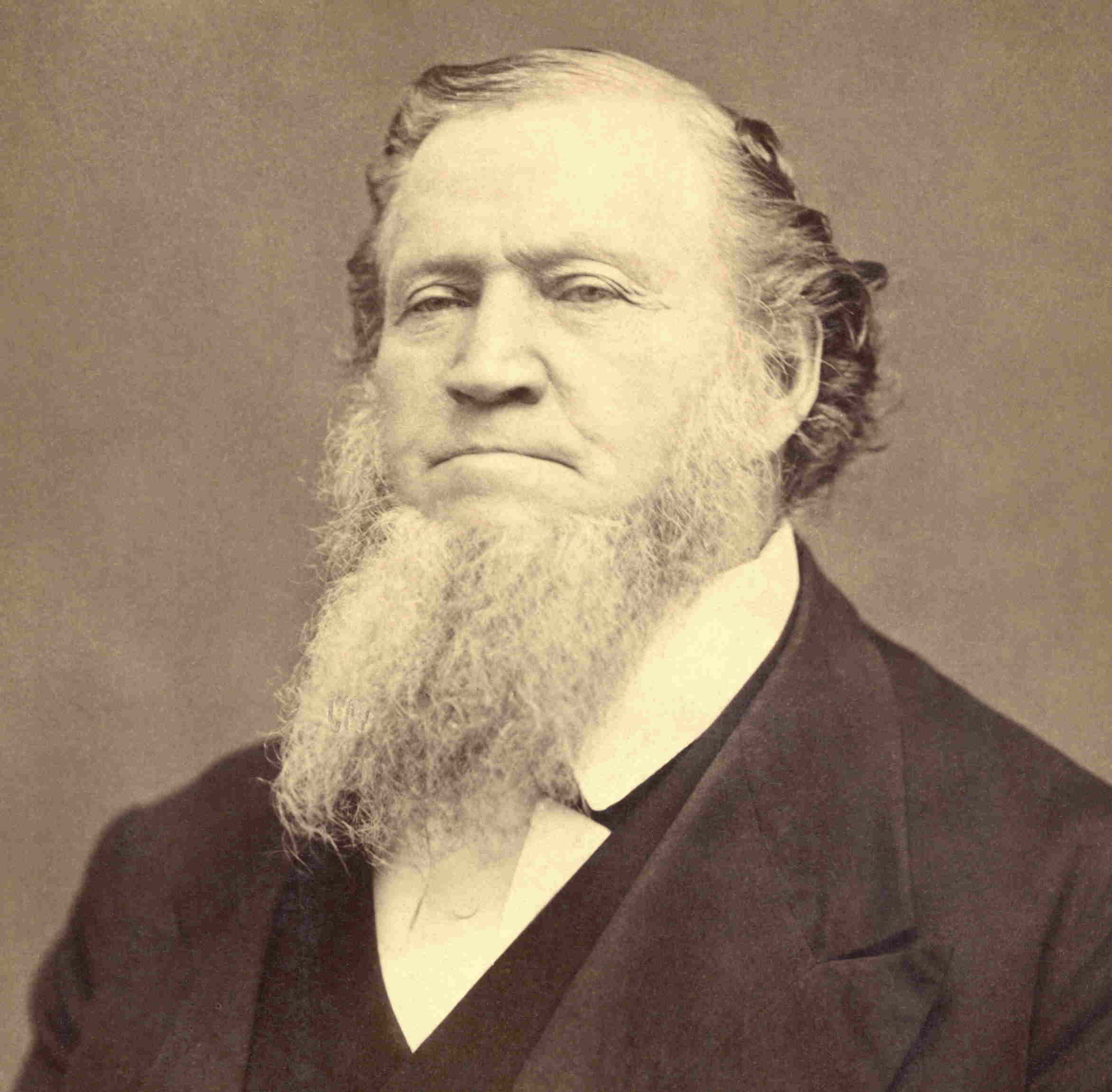 In a 2012 General Conference address, Elder M. Russell Ballard of the Quorum of the Twelve Apostles of the Church of Jesus Christ of Latter-day Saints, expressed concern about "the ever-growing gap between the rich and poor." Elder Ballard's concern about gross wealth inequality has been shared by many of his predecessors. Elder Orson Pratt once observed that "an inequality of property is the root and foundation of innumerable evils; it tends to derision, and to keep asunder the social feelings that should exist among the people of God.... It is a principle originated in hell; it is the root of all evils.... It is inequality in riches that is a great curse."
Help us reach 3,000!
At the beginning of this year, LDS Dems set a goal of reaching 3,000 members in 2013 and we are almost there!
Will you help us hit our goal?
By clicking on this link- http://salsa3.salsalabs.com/o/50383/signup_page/joinus - you will receive our newsletter as well as important updates and events the caucus is working on.
We are only 250 away from our goal- easily reachable! Sign up now at http://salsa3.salsalabs.com/o/50383/signup_page/joinus and get all the great information about what is happening in your area and across the country.
It has never been so important to stay informed, so let us send information directly to your inbox! Fill out our form at http://salsa3.salsalabs.com/o/50383/signup_page/joinus and we will keep you up to date on issues, events, and other relevant goings-on in our progressive LDS world!
Leave Jim Matheson Alone
 The other night while surfing various political sites and social media groups I came across a troubling Facebook page; “Democrats Done with Jim Matheson”. For those of you unfamiliar with Representative Matheson, he is a Democrat Congressman from the reddest of states, Utah. Matheson has been a political chameleon as of late, voting with the Republicans on several issues including the shutdown and the countless repeals of the Affordable Care Act. He represents Utah’s 4th district which overwhelmingly voted for Governor Romney over President Obama in 2012 by double digit margins. He also won a razor close election edging out his Republican rival Mia Love by .3%. Ms. Love has already announced she will run again, and this time Matheson does not have the help of a presidential election.
This Facebook group’s premise explains the reason for rejection, “This page is for Utah Democrats that are sick and tired of Jim Matheson. We see him for the real man he is. A DC politician only worried about reelection.” I completely agree -- Matheson is worried about re-election, and as a vocal Democrat, I am too. However, I am more worried about losing the seat than any floor vote Matheson casts. In fact I ENCOURAGE Matheson to vote with the Republicans every single vote where a majority is established (and with the Hastert Rule, that is every vote). For those of you balking at such a position let me explain further.
Irrelevance is being a minority party in the House of Representatives. A minority party cannot decide the floor agenda, appoint committee chairs, direct debates, or initiate votes. In setting up our government, the Framers designed the representative body of the House to work in a democratic setting. Unfortunately, what they did not take into consideration is the rampant gerrymandering that has undermined the intent and balance of the Constitution. In 2012 there were 1.5 million more votes for House Democrats yet today there are 33 more Republican Representatives. In order to return appropriate balance Democrats will need to flip those seats, many of which are anchored in steadfast red districts, to return the balance of power back to the majority.
Any primary challenger that successfully defeats Matheson will cost Democrats a congressional seat. Even an unsuccessful primary challenger will force Matheson to the left, which will be leveraged against him in the general election. Even more problematic than losing Matheson’s solitary (and inconsistent) vote is the daunting challenge for Democrats to flip one more seat and regain control of the House. If by small chance Democrats do achieve majority, and Matheson continues to vote with the Republicans, Democrats would still be in a much better place.
For all my Democrat friends in red districts the same strategy applies. Vote with the furthest right leaning candidate in primaries or the candidate that polls strongest against a Republican challenger. No one candidate is above control of the House, which should be the only priority for Democrats in 2014.

October 18, 2013