

Idaho: Guns on Campus?
Guns on campus? What's the rush?
Idaho Senate Bill 1254 relieves Universities of a right currently granted to them, usurping the right and responsibility Universities have to establish gun free zones on their campuses. We implore you to analyze stakeholder concerns, consider the state of safety currently afforded at our institutions of higher education and the costs and benefits of changing policies currently in place.
We encourage you to seek broad spread support from stakeholders, including central stakeholders in school administrators and students. No matter the outcome, these are folks that will need to live a majority of their days with the decisions made and anxieties that could come from them. There is absolutely no reason this bill needs to be rushed through the legislative process and doing so will only lead to the lack of support from central stakeholders. If this is such a constitutional travesty, perhaps legal action should have been pursued years ago rather than beating this drum each session, waiting for the stars to align and get it passed.
As members of the Church of Jesus Christ of Latter-day Saints, we’re proud to support a great Brigham Young University system of which one campus is located in Rexburg, Idaho. This school system, like our current public institutions of higher education in Idaho, does not feel that gun carrying students are conducive to the academic environment on their campus or needed for improved campus safety.
10 years ago, BYU President Merrill Bateman (1996-2003) filed a sworn affidavit in support of the University of Utah's campus gun ban that was challenged by the State of Utah. Utah did not have a provision of state code allowing institutions of higher education to regulate firearms on campus like Idaho does. Bateman said, “I am aware of no situation or incident that has occurred on BYU’s campus that could have been alleviated by the intervention of citizens armed with concealed weapons. On the other hand, there have been situations where the presence of firearms, even in the hands of law-abiding citizens, would have complicated, escalated and ultimately aggravated the situation or conflict,” Bateman said.
This session, Boise State University President Bob Kustra almost quoted President Bateman verbatim saying, “In fact, we can find no recorded incident in which a victim—or a spectator—of a violent crime on a campus has prevented a crime by brandishing a weapon. In fact, professional law enforcement officials claim that increasing the number of guns on a campus would increase police problems and make it difficult for police officers in a shooting situation to tell the good shooter from the bad shooter and inadvertently shoot an innocent person. Weapons on campus may, in fact, lead to an acceleration of conflict in stressful situations.”
There’s a considerable lack of data regarding the effectiveness of gun carrying on campus, which should really be provided if this is truly a campus safety bill. Until the claims that allowing concealed weapons on campus will make Idaho’s campuses safer can be quantitatively estimated and relied upon, we recommend that you let the decision rest on those who run these institutions and are responsible for their safety. We hope you’ll work together to enact reforms that continue to benefit higher learning in the great State of Idaho.
Jordan Morales
LDS Democrats of Idaho
Chair

Understanding the Conservative Dictionary
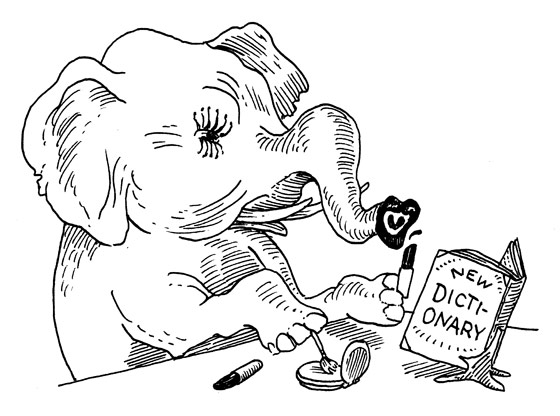 Lately I have been engaged in several debates and discussions with my conservative friends. I am often entertained with how they use words or phrases to exemplify a position or undercut my arguments. Since I find many of these tactics somewhat humorous, I decided to share some of the user's perceived definitions and place them against the litmus test of reality. Enjoy!
2nd Amendment: The right of the people to keep and bear Arms shall not be infringed. Reality: A well regulated Militia, being necessary to the security of a free State, the right of the people to keep and bear Arms, shall not be infringed. The Framers were opposed to standing armies and felt it was the people’s role to defend the Free State (which is ironic given our current military structure). There was purpose in gun ownership and the Founding Brothers always supported moderation in all things.
Birthers: Those who oppose any presidential nominee born outside of the United States as per the Constitution. Reality: This view really only applies to Democrat nominees. Currently one of the GOP presidential front-runners is Tea Party favorite Ted Cruz who was born in Canada. John McCain was born in Panama and George Romney was born in Mexico.
Communist: (also see Socialist) Conservatives are not really sure of the difference between a Socialist and Communist. Reality: Communism is COMPLETE governmental control of capital and resources. Nobody supports this, not liberals, not even Hitler.
Constitution: Our nation's founding document that can only be correctly interpreted by conservatives. Reality: The Constitution is cherry picked by conservatives to fit their agenda. Appointing judges, nominating cabinet positions, controlling the executive branch, and conducting foreign policy fall squarely under the President’s command but is undermined by conservatives on a regular basis. Advice and Consent by the Senate is being abused and the House of Representatives does not represent the majority of the people due to gerrymandering.
Gun Control: The belief that government is coming for your guns and undermining your rights. Reality: Gun control is common sense solutions to help curb the rampant violence being experienced in our country. Ideas such as the Brady Bill, background checks, concealed carry permits, resources for the ATF to enforce current laws, and gun dealer inventory requirements are all solutions that can help prevent a portion of our 30,000 gun related deaths each year.
Entitlements: The giving out of free handouts to the lazy and parasitic by the government. Reality: 60% of all entitlements go to seniors, 20% go to the disabled, 10% go to working families, and another 10% go to non-working individuals and families (including college students). It should also be noted that red states take more entitlements per capita than blue states.
Executive Orders: A power grab by the President of the United States as a way to circumvent the Constitution. Reality: The President of the United States has the authority to regulate how the executive branch functions.
Family Values: The basis for America’s greatness and the aspiration of how we should live as a society. Reality: Conservatives use family values as an ambiguous argument trying to suppress any diversity in social norms.
Food Stamps: Free handouts to the lazy. Reality: 50% of all food stamps go to children, and another 15% to seniors. 1 in 5 veterans are also recipients of food stamps.
Liberal: Any person that expresses a difference of opinion with a conservative. Reality: A liberal is any person who fights for individual liberties. The definition has been twisted by conservatives and misused to represent any person offering a difference of opinion. Being labeled a liberal brings full discredit in any political conversation or debate with a conservative.
Liberal Media: Any media outside of conservative news sources. Reality: This term is used when conservatives lack a coherent response to any data being sourced. This could be viewed as the ultimate debate cop-out which, by disregarding the source, immediately invalidates all arguments.
National Debt: The amount of money we have to borrow due to the President’s budget. Reality: The Debt is a function of multiple administrations impacting mandatory expenditures that cannot be changed unless reversed by the House, Senate, and President working together.
National Deficit: The same as the National Debt (really – I hear this all the time). Reality: The National Deficit is the annual (not total) gap in spending vs. receipts.
Pro-Choice: A liberal position that encourage woman to seek abortions for their poor choices. Reality: Pro-Choice does not mean pro-abortion. Abortion is a complicated choice and the decision cannot be lumped into one generic stereotype. Pro-Choice should be left up to the individual’s doctor, religious authority, family and not directed by government influence. It should also be noted that 30% of all abortions are by married women and the abortion rate has been declining rapidly since 1980.
Pro-Life: A position that believes the embryo is a living person, and the sanctity must be protected at all costs. Reality: Pro-life arguments typically end at conception.
Ronald Reagan: The ultimate conservative and the gold standard for Republicans. Reality: Ronald Reagan supported gun legislation, signed pro-choice legislation, passed two of the largest tax hikes in American history, tripled the National Debt, passed full access for the uninsured to use emergency rooms, provided amnesty for three million undocumented workers, and signed several pieces of social reform legislation into law. I’m pretty sure he would be kicked out of the Republican party today.
RINO: Republican In Name Only Reality: Name given to any Republican that does not maintain total loyalty to party ideas and platforms. I have seen Republican legislators who vote with the party 95% of the time and still be labeled a RINO.
Science: A selective explanation of data and theory that can be opposed for political justification. Reality: Public opinion does not trump scientific data.
Socialist: (also see Communist) Any person who supports government programs, fair taxation policies, or pretty much anything that is associated with the Democratic Party. Reality: Socialism is governmental control of capital and resources. The police, fire department, public schools, libraries, national parks, roads and bridges, judicial system, and the military are all socialist organizations. Our country has always been a mixed-market economic system balancing socialism and capitalism.
Tea Party: A political movement that is holding our leaders responsible both fiscally and conservatively. Reality: A political movement that brings little to no ideas to the table and uses opposition as its only weapon. The Tea Party takes extreme stances on every conservative issue and has been detrimental to the party when it comes to elections (Republicans would have control of the Senate today if it wasn't for Tea Party candidates). The Tea Party creates gridlock and then points to the same gridlock as to why government doesn't work.
Tyrannical Government: Our nation’s leadership making obsessive power grabs to suppress the ideas of the majority. Reality: A conservative narcissist phrase used as fear-mongering to generate divide among our citizens. Simply refuted, ask any believer why a tyrannical government would willingly submit to public elections.

February 20, 2014
Congress: Do your job
The question is: Who is at fault for this problem?
To answer that, a few case studies from history might be instructive.
In the late Middle Ages, the largest and most powerful nation in Europe was the Polish-Lithuanian Commonwealth. It stretched from the Baltic to the Black Sea and from Germany and Austria almost to Moscow. Almost all of what we know as Eastern Europe, include much of today’s Russia, was contained within its borders.
Except for avid students of European history, the above paragraph is probably mildly surprising. Most of you have probably never heard of the Polish-Lithuanian Commonwealth. Where did this large, powerful nation go? We have Poland and Lithuania today, but these nations are hardly world powers. What happened?
The Commonwealth was ruled by an elected king and by the Sejm, a legislative body consisting of the nobles of the country. In the late 1600’s the concept of the liberum veto was introduced in the Sejm. This change allowed any member of the Sejm to veto any legislation, essentially requiring a unanimous vote to pass. About the same time, the members of the Sejm started to be more concerned about their own little fiefdoms rather than the overall good of the nation. The result was that the Commonwealth became ungovernable. Her neighbors took advantage of the situation, and during the latter half of the 18th century, she was literally carved up and partitioned amongst her neighbors; Russia, Prussia and Austria. The American Revolutionary War hero Tadeusz Kościuszko returned to his native Poland and led a revolution to try to save his country, but by then it was too late.
More recently, we have the example of the depression-era Weimar Republic in Germany, where a bickering, divisive Reichstag resulted in paralyzed government and paved the way for Adolf Hitler to assume power.
There are many more examples, but the lesson is clear: The path to tyranny is paved by dysfunctional government, especially in the legislature, which is the branch most closely tied to the people.
The parallel to the United States in 2014 is clear. One of the major political parties has a curious, perverse incentive: Their ideology claims that the government can’t do anything right, so they have the incentive to create a self-fulfilling prophecy.
However, the government has to function. We can have honest debates over what the government should do, but once the decision has been made, we must work together to make government function.
My message to congressional Republicans couldn’t be more clear: Are you upset about President Obama trying to do your job? Then why don’t you do your job.
Obamacare Unlocks American Innovation
 America’s antiquated health care insurance system has hampered innovation and ultimately slowed economic growth for decades due to the insurance system’s perverse incentives. However, the 2010 Affordable Care Act (ACA), or Obamacare, has done much to reverse those disincentives. Consider the following scenario:
Imagine you work for a large company that pays an acceptable salary. Like three-fifths of all American workers, your employer also pays a significant portion of your family’s health insurance premium, which, as part of a group health insurance plan, already costs much less compared to the health plans available to small businesses and the self-employed. However, after working at the same company for many years, you yearn for the opportunity to start your own business. Maybe you are tired of being subordinate to a large corporate bureaucracy. Perhaps you have even begun to hate your job. Over time, you develop a several good business ideas and finally are at a point where you feel your proposals are robust enough to start a new business. What would keep you from quitting a job you do not like for pursuing your personal business dream? Like any responsible breadwinner, if the job was your family’s sole source of health insurance coverage, you would likely be hesitant to give that up in order to start a new business without any guarantee of success.
Read moreTime for a Tax Increase for Education
Former Utah State Representative Ogden, UT 84403
District 10
Let’s raise taxes to fund education. I know this is a bold statement in Utah where we are expected to do much with little funding, but most polls show that over 60% of Utah citizens are willing to pay more taxes if the money is used for schools.
Believe it or not, in the 1980’s, Utah’s funding per child was about the national average. At the time, we had large families and many children in our schools just as we do now.
Years earlier with a Constitutional Amendment, some forward thinking legislators, I will call them statesmen, earmarked all income tax to go to schools. The Education Fund would support our public schools, kindergarten through 12th grade. This decision would leave the General Fund to take care of the other obligations in the State.
But come 1995, the Legislature saw the money in the Education Fund and wanted to use it as they saw fit. So again, a Constitutional Amendment was put on the ballot that the Education Fund could be used to fund Higher Education. Teachers were concerned about losing this funding, but they were told if they came out against the Amendment that the income rate could be lowered. Also, the worst part was that it was pitting one educational entity against another. The Amendment passed. As a result, in 1996 the public schools were receiving about 98% of the Education Fund. In 2008, the last year that I served in the House, they received 73%.
In 2008, the Legislature passed the “flat tax” rate for income. The idea was to make it easier to file your state income tax. Even though it was touted as a “flat tax,” several items were kept, such as a deduction for children and a deduction for charitable contributions. The change was to be revenue neutral. In other words, taxes would not increase, but the schools would not lose money. The end result: the schools lost approximately $200 million per year.
At the present time, our “flat tax” is 5%; not including the deductions that are still allowed. If we raised that amount to 5 ½%, $275 million would be generated which could lower each classroom by three students or which could be used for needs as assessed in each school district. Six percent would give the schools $550 million. About 10 years ago, Mississippi was on the bottom as far as per child funding. They always used the term “bite the bullet” as they raised taxes to fund their schools. Their funding is now well above ours.
During this recession, many have had to sacrifice; some have not. The hard part of any proposal is trying to decide how people will be affected. We do know that those with large families, including some legislators, end up not paying any income tax.
In the past fifteen years, we have had these two dramatic hits to educational funding. Now is the time that we need to step up to the plate and take care of the students of Utah. Reports are showing that our students are not doing as well as they should. Of the 50 states, Utah is at the bottom of funding by at least $1000 per child. I believe it is time we meet the challenge and increase our income tax rate to meet this crisis of funding in our public schools.
Censuring Arizona’s GOP
I personally want to thank Arizona’s Republican Party. From the removal of concealed-carry permits, to SB 1070, to radical border philosophy, to Sheriff Joe’s posse, and now the attacking of Senator John McCain, misguided legislators are alienating key voting demographics in the state. The Hispanic vote is growing leaps and bounds, doubling this past decade and edging close to 30% of the electorate. Moderates are regularly siding with Democrats over issues like gay rights and immigration reform causing key political strategists to take notice. Many have switched Arizona from red to purple going into 2016 and believe this transformation will continue for decades to come.
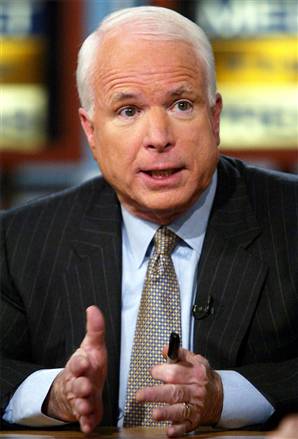 Current voter evolution is lost on our state leaders. Recently Arizona GOP legislators passed a resolution censuring McCain, a moderate favorite, for his “long and terrible record of drafting, co-sponsoring and voting for legislation best associated with liberal Democrats.” They also used the session to vote on a support measure for non-Arizonan Senators Ted Cruz and Mike Lee. You read that correctly – Arizona legislators wasted taxpayer resources to show support for Senators that do not represent their constituents. Of course, this misguided political theater is far from the truth as John McCain’s 90% party-line voting record stands on its own. Probably the most conservative vote of McCain’s career came in 2003 when he, and then-Congressman Jeff Flake, bucked their party voting against a massive prescription drug entitlement program. That single bill accounts for $17 trillion in unfunded liabilities today and one of the largest drivers of our national debt. In contrast that same bill passed with votes coming from Eric Cantor, John Boehner, Paul Ryan, Tom Delay, Jon Kyl, Rick Santorum, Pete Sessions, Darrell Issa and several current Tea Party darlings.
To be fair, Arizona’s divisional rhetoric mimics what we experience across our nation. Conservatism has been replaced with exclusionary politics that cast aside any politician that does not align with their platforms 100% of the time. Cloaked under the guise of the Constitution these political radicals are punishing any politician that steps across the aisle, ignoring the entire compromising fabric of our originating document. Such attitudes were on display earlier this year as the country witnessed the full Tea Party agenda as the government was held hostage by a misguided minority. Such extreme positions were also experienced at local levels as two Colorado State Senators were ousted for supporting the same common-sense gun legislation that Ronald Reagan would have endorsed.
Ironically, embattled Senator McCain’s approach to immigration is the only path that will save Arizona’s current Republican Party. The Hispanic community is a becoming a force and the Tea Party circus is motivating voters across the state. One of Arizona’s residents, a national political strategist for the GOP, commented that such extreme actions such as censuring Senator McCain are why “they (the nation) laugh at us.” I completely agree. Arizona’s intolerant primary voters will soon see the same phenomenon experienced in Nevada, Delaware, and other states where extreme candidates were traded for moderate Democrats, which I will applaud.
January 28, 2014
The liberating form of government intervention
 Mormon youth are taught, from a young age, that restrictions can increase freedom. That some laws, ones that seem to decrease our freedom, actually increase our freedom.
Take the Word of Wisdom, for example. We are taught that living by the Word of Wisdom is a requirement. This requirement strictly limits us in certain areas: no alcohol, no drugs, no coffee or tea, no meat but for in times of famine, etc. But, we understand, those limitations actually increase our overall freedom. Even though our freedom is limited when it comes to alcohol (for example), our freedom is maximized in the sense that we are free from the negative effects of that alcohol. As one article in the Church's Ensign puts it:
Read more
January 27, 2014
Two options for solving the "disincentive to work" problem
Despite the occasional snarky comments you hear about poor people being lazy, there are tens of millions of American families where both spouses are working full-time, or even multiple jobs, and still struggling to make ends meet. One thing Krugman admits in his column is that the current safety net has huge disincentives for improving one’s economic situation. This is not because America’s working poor are lazy. It’s because the current system of public assistance tapers too rapidly. Working more hours, taking a second job, or sending your spouse into the workplace could result in an effective tax rate on that new income of up to 80%, as the government takes away assistance almost at the same rate as income increases. If the system penalizes you for improving yourself, it will of course affect the choices you make. The Affordable Care Act makes an honest attempt to remedy this situation in regards to access to health care (in the states where Republicans allow it to function), but in general, it’s still true that those who are on full public assistance are sometimes better off than those who are working hard to try to support themselves.
There are theoretically only two ways to remedy the above incentive problem:
- Dramatically reduce or eliminate public assistance. If there is little or no public assistance for poor Americans, the tapering question is moot.
- Reduce the rate of change for tapering public assistance from earned income sources, with an eye toward eliminating the disincentive for self-improvement. This could be done many different ways; through the tax code (such as making the earned income tax credit more generous), through temporary “underemployment” benefits, or direct assistance.
The first proposal would result in an increase in human suffering, especially for children, and arguably would hurt the economy by reducing already suppressed consumer demand.
The second proposal successfully solves the incentive problem, while reducing human suffering and adding demand dollars to the economy. It would be one of the simplest ways to begin to address what President Obama has rightly called the challenge of our time: persistent income inequality and the separation of Americans into economic classes with little economic mobility.
The second solution does have one drawback: It would cost more. And by definition, given what we’re trying to accomplish (removing disincentives for self-improvement among the working poor), that cost would have to be borne by higher income Americans.
Conservatives would obviously balk at the second idea. But there is one argument that they could not make: That it would be just another government give-away to lazy freeloaders. The people who would be helped by this approach are the hardest working Americans of us all. The whole idea would be to ensure their efforts at self-improvement are not in vain.
It remains to be seen if the President or any mainstream elected Democrats out there are courageous enough to pick up the gauntlet that Professor Krugman has thrown down.
Is Obamacare Doomed for Failure?
 When the media finds a narrative it loves, it tends to hang on, even when the facts do not compute. The poll numbers for the Affordable Care Act (ACA), or Obamacare, have plummeted since the embarrassingly flawed roll-out of the online health insurance exchanges, and as reports spread regarding cancellations of some lower-grade insurance policies. And while some of the recent criticism of the health law is appropriate and much of the damage self-inflicted, polls also show that most Americans know very little about the health reform law. “Health Affairs,” a leading peer-reviewed journal on health policy, recently conducted a survey of top health care executives from large hospitals and health care systems across the U.S. and found surprisingly positive viewpoints about the prospects for ACA’s success. It is noteworthy that the individuals polled for this survey are health policy leaders who are well informed on how care is delivered and health care budgets are managed. Of those surveyed 65 percent believe that the U.S. healthcare system will be somewhat or significantly better than it is today by 2020. When asked about the prospects for improvements in their own organizations, 93 percent predict that the quality of care will improve. Similar attitudes were forecasted for reductions in cost and improvement in delivery of care all around.